




Questions have flooded social media:
Capacity? Will the club have to move home matches? What does the project look like?
- Home >
- Soccer >
- Liga Profesional Argentina >
- Riquelme Confirms Renovation of Boca Juniors’ La Bombonera
Riquelme Confirms Renovation of Boca Juniors’ La Bombonera
The president of Boca Juniors, Juan Román Riquelme, confirmed what many fans had been waiting for: the expansion of La Bombonera.
The expansion of La Bombonera has once again become a major topic among Boca Juniors supporters. For a global audience—especially Spanish-speaking fans following football from the United States—the project represents not only a structural renovation but also a strategic step toward placing the stadium among the world’s great football venues.
A Historic Stadium Looking to Grow
In recent years, since Jorge Ameal assumed the club’s presidency and with Juan Román Riquelme as the main football and institutional authority, the Alberto J. Armando Stadium has undergone several infrastructure improvements.
The works included the renovation of the façade, access points, internal areas, and adjustments that slightly increased the stadium’s capacity.
“They handed us our home in ruins… It was destroyed and abandoned,” stated JRR.
However, 2026 could mark a turning point. For the first time in two decades, the stadium could begin a significant expansion with the construction of a fourth tier, considered the first phase of a much larger project.
The New Tier: +6,000 Seats
According to renders that have not yet been officially released—but were confirmed by Riquelme on “El Canal de Boca”—La Bombonera will add a new tier below the existing three, bringing approximately 6,000 new seats, designated exclusively for premium seating.
At the same time:
- The seats in Sector K will be permanently removed.
- The third tier will return to being entirely a standing supporters’ section, as it originally was.
This change will significantly increase the stadium’s overall capacity.
With these initial modifications, attendance would rise from 57,000 to nearly 67,000 spectators.
To move forward with the project, the club’s leadership has already submitted documentation to the railway company Ferrosur, as part of the construction involves installing structural columns near the train tracks.
On these pillars, 18 elevators will be installed to connect the entrances with the new stadium sector.
Final approval will depend on the National Transport Regulation Commission (CNRT), the agency responsible for authorizing construction near railway infrastructure.
The new façade at Brandsen 805 is expected to be inaugurated soon.
When Construction Could Begin
At Boca Juniors, officials prefer not to set exact dates yet, but they estimate the most significant work could begin during the mid-year break, once the Apertura Tournament and the Copa Libertadores group stage conclude.
Before that phase, the club plans to complete other improvements:
- Expansion of access points and corridors in the Platea L section.
- Construction of a new food court area.
- Progress on a gym for members on Brandsen Street.
- Installation of a 30-meter LED screen at the main entrance (Brandsen 805).
A key detail: Boca Juniors would not need to change its home venue during this first phase.
The Master Plan for the New Bombonera
The fourth tier is only the beginning of a much broader transformation plan.
The so-called Master Plan includes:
- Moving the pitch several meters (between 4 and 5 meters) toward the train tracks.
- Reducing the Platea L (Lower Section).
- Relocating the substitute benches.
- Creating a new access tunnel for both teams.
- Optimizing the supporters’ sections.
- Installing a full roof with a 360° screen.
- Demolishing the luxury boxes built in 1995/96 on Iberlucea Street.
In that space, the club plans to build:
- Two new seating sections.
- New corporate suites.
The number of luxury boxes would increase from 86 to approximately 240.
Additionally, the plan includes returning the third tier entirely to a supporters’ section, something that historically formed part of the stadium’s identity.
Final Goal: An 80,000-Seat Bombonera
The towers with stairways and elevators will connect through a bridge that crosses above the train tracks.
If all stages are completed—fourth tier, new suites, expanded supporters’ sections, and reconfigured seating—La Bombonera could reach a capacity of around 80,000 spectators.
That figure would place Boca Juniors’ stadium among some of the most iconic venues in world football, such as:
- Wembley Stadium (London) – 90,000
- Santiago Bernabéu (Madrid) – 84,000
- MetLife Stadium (New Jersey) – 82,500
- Estadio Azteca (Mexico City) – 83,000
Four football temples capable of hosting crowds exceeding 80,000 fans.
A Global Partnership: Hard Rock Comes to La Bombonera
Alongside the expansion project, Boca Juniors is also advancing a strategic partnership with Hard Rock International.
The agreement includes the opening of a Hard Rock Cafe inside the stadium, in the space where the club’s traditional cafeteria once operated.
The new restaurant will cover approximately 900 square meters and will feature multiple entrances from both the stadium and Brandsen Street, which will soon showcase a new glass façade.
The opening is expected in mid-2026 and will represent an initial investment of about $2 million from the American company.
The deal also stipulates that Boca will receive a percentage of food, beverage, and merchandise sales from the venue.
With this initiative, La Bombonera would become the first football stadium in the world to host an official Hard Rock restaurant.
La Bombonera, Increasingly Attractive for Celebrities
In recent years, the stadium has also become a cultural and media hotspot.
Among the most notable visitors have been pop star Dua Lipa, Spanish singer Rosalía, musicians Liam Gallagher and Noel Gallagher, actor Johnny Depp, actor Willem Dafoe, and NBA player Jimmy Butler, among many others.
Their visits reinforce the idea that La Bombonera is not just a stadium, but a cultural phenomenon attracting global attention.
A Project With Sporting and Political Impact
For Juan Román Riquelme, the project represents far more than an architectural expansion.
A renovated Bombonera with capacity for more than 80,000 spectators could solidify Boca Juniors as one of the clubs with the largest fan turnout in the world.
Additionally, the project could play a significant role in the club’s political landscape ahead of the elections scheduled for 2027.
If the plan becomes reality, the legendary stadium in La Boca could take the ultimate leap: evolving from one of football’s most intimidating venues into one of the largest on the planet.

10:07
CONMEBOL SudamericanaBoca Thrash Recoleta and Advance to Quarterfinals

CONMEBOL SudamericanaBoca Thrash Recoleta and Advance to Quarterfinals

CONMEBOL SudamericanaLIVE: Recoleta vs. Boca Juniors

CONMEBOL SudamericanaBoca Change Their Lineup Without Paredes
10:23
CONMEBOL SudamericanaBoca Turn It Around in Three Minutes vs Recoleta

CONMEBOL SudamericanaBoca Turn It Around in Three Minutes vs Recoleta
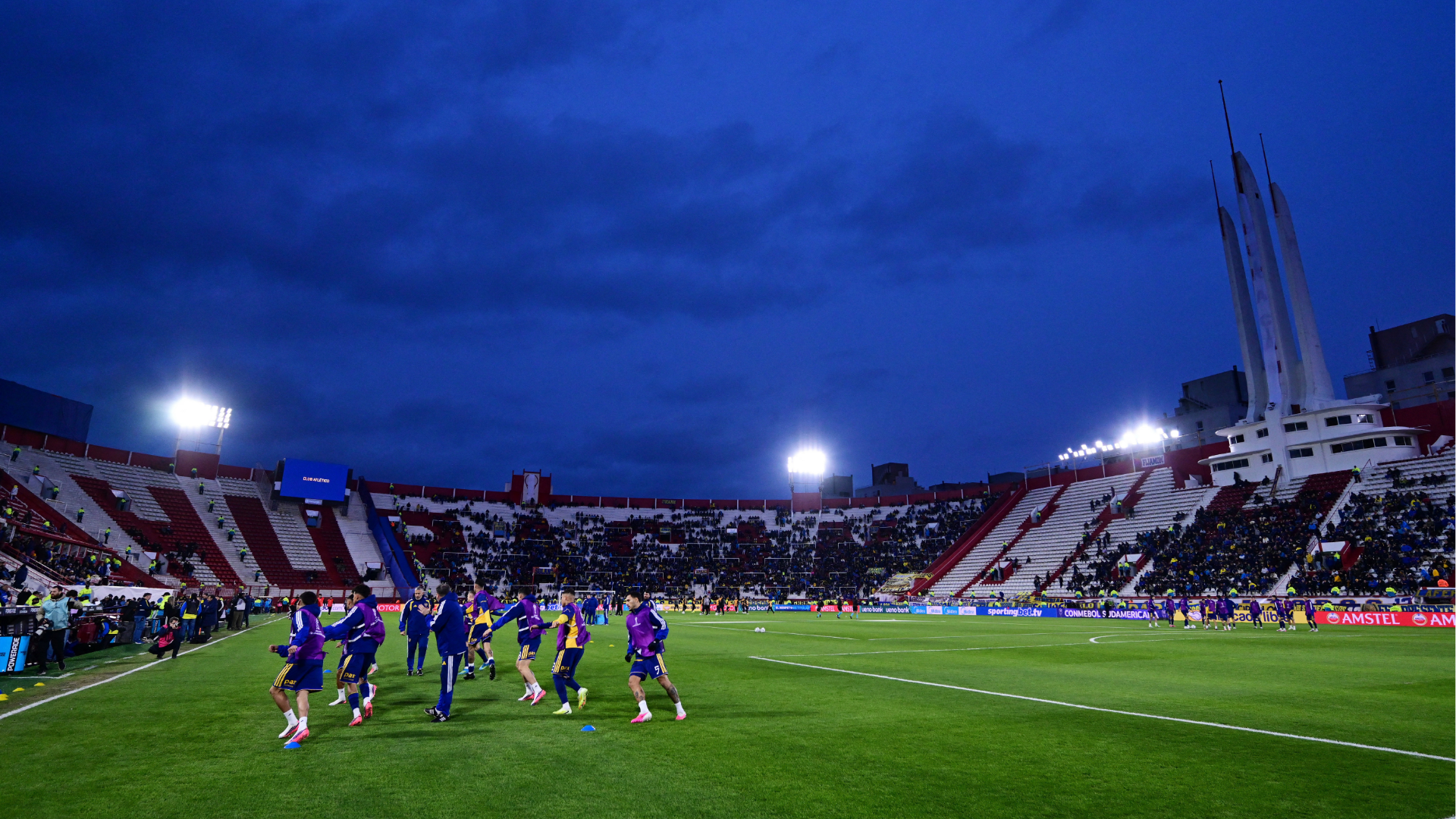
CONMEBOL SudamericanaWhy Did Boca Play Recoleta Away From La Bombonera?

CONMEBOL SudamericanaHow and Where to Watch - Boca Juniors vs. Recoleta

CONMEBOL SudamericanaHow and Where to Watch - Boca Juniors vs. Recoleta

Liga Profesional ArgentinaEnner Valencia One Step Away from Boca

Liga Profesional ArgentinaParedes Booked in the Middle of the Investigation


