
Netherlands Considering Xavi Hernández
Xavi Hernández could be ready to return to coaching, and he could do so in a place that, from a soccer philosophy standpoint, appears tailor-made for him. The former FC Barcelona manager is among the candidates to become the new head coach of the Netherlands and replace Ronald Koeman.
According to information published by De Telegraaf, the Royal Dutch Football Association (KNVB) has already explored the possibility of appointing the Spanish coach, and his name is reportedly gaining momentum as a final decision approaches.
Roberto Martínez and Michael Reiziger, the current coach of the Dutch U-21 team, have also been linked with the position.
But Xavi’s candidacy has one particularly attractive ingredient.
His understanding of soccer has a historic connection with the Netherlands.
Xavi, One of the Heirs to Cruyff’s School
Talking about Xavi Hernández inevitably leads back to Johan Cruyff.
Not because Xavi played directly under him, but because he developed as a player within a structure that Cruyff profoundly transformed during his time at FC Barcelona.
Possession, space, numerical superiority, pressing immediately after losing the ball and the need to control matches through possession are all part of a philosophy with deep Dutch roots.
The Netherlands changed the history of the sport with its legendary 1974 team, coached by Rinus Michels and led on the field by Cruyff.
The Clockwork Orange did not manage to lift the FIFA World Cup, but it left behind something perhaps even more important: a different way of understanding the game.
The famous Total Football system allowed players to interchange positions, intelligently occupy spaces and attack without sacrificing collective balance. More than a formation, it was a philosophy.
Decades later, many of those ideas found a new evolution in Barcelona.
From Cruyff to Guardiola, With Xavi as the Conductor
The connection became even more evident with Pep Guardiola’s FC Barcelona.
Guardiola took many of the principles inherited from Cruyff and developed them into an even more sophisticated style of soccer: long spells of possession, immediate counter-pressing after losing the ball, positional play and an obsession with creating numerical advantages around the ball.
And at the center of everything was Xavi Hernández.
Alongside players such as Andrés Iniesta and Sergio Busquets, Xavi was the conductor of one of the greatest collective teams modern soccer has ever seen.
He did not need to run more than everyone else.
He needed to think faster than everyone else.
His ability to read space, accelerate or slow down the game and constantly find the free man turned the midfielder into one of the greatest symbols of that philosophy.
Now, he could try to bring those ideas to the very country where much of that revolution began.
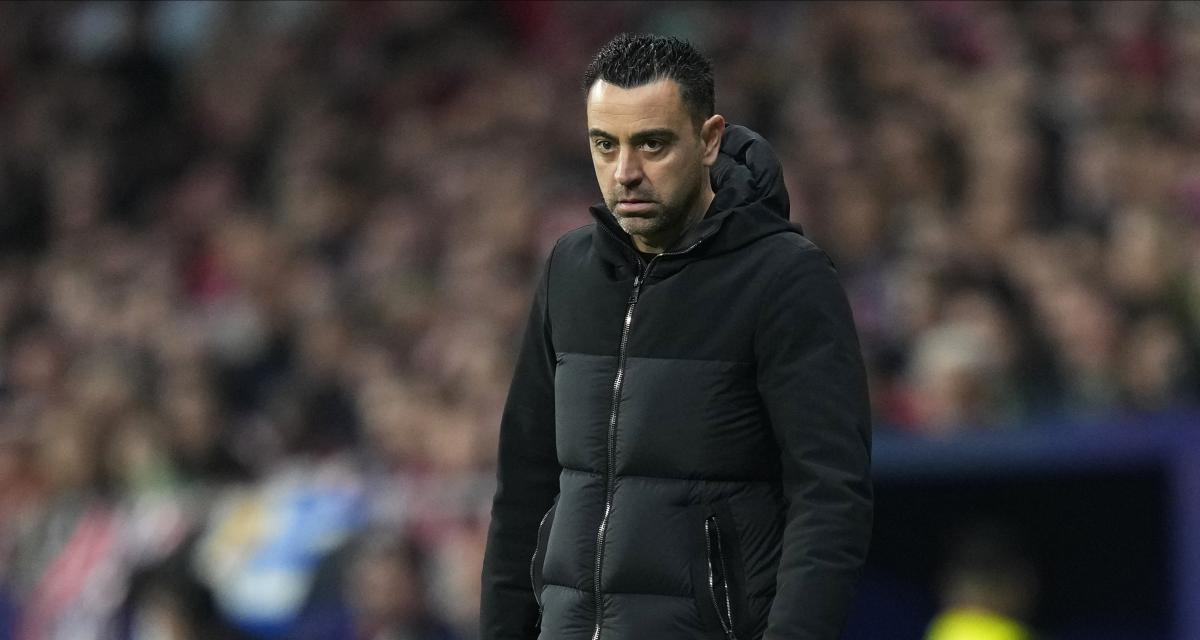
How Does a Xavi Hernández Team Play?
His time as Barcelona manager provided plenty of clues.
Xavi wants his teams to take control.
His approach begins with clean buildup from the back, width from the wingers and intelligent occupation of space. He looks to create numerical advantages in midfield, progress through passing combinations and keep his team in the opposition half for long stretches.
The ball is not simply a tool for attacking.
It is also a way to defend.
When his team loses possession, the first objective is to win it back immediately. That is another clear connection to the school later developed by Cruyff and Guardiola.
However, his Barcelona also showed that Xavi can be pragmatic when a match demands it. During his time with the Catalan club, he was capable of changing structures, using more direct attacks and protecting results when his team could not dominate exclusively through possession.
That flexibility would be important in international soccer, where a coach has far less time to develop automatic movements and tactical patterns.
Why Could Xavi Fit the Netherlands?
The biggest advantage is that he would not have to start from scratch.
The Netherlands retains a soccer identity historically built around possession, playing out from the back and developing technically gifted players capable of interpreting different positions.
For Xavi, that environment could be ideal.
He would not arrive to impose a completely foreign philosophy, but rather to reinterpret principles that already form part of the Oranje’s own history.
Managing a national team also presents a different challenge from club soccer. There are fewer training sessions, less time to make corrections and a much greater need to communicate tactical concepts quickly.
That would force Xavi to simplify his ideas.
The challenge would be finding the right balance between the positional soccer that characterizes the Spanish coach and the verticality that has historically made the Netherlands so dangerous.
Xavi Could Replace Koeman Once Again
There is also an interesting twist surrounding his potential appointment.
It would not be the first time Xavi Hernández has replaced Ronald Koeman.
In November 2021, he took charge of FC Barcelona following the Dutchman’s departure. Years later, history could repeat itself, this time with the Netherlands.
Xavi has not coached since his spell with Barça ended in 2024 and has recently shown himself open to the possibility of managing a national team.
The Dutch federation wants to resolve its coaching situation as soon as possible and have the new manager in charge for the next international window.
There are still other candidates and no final decision has been made.
But from a soccer perspective, few potential appointments would carry such a fascinating historical connection.
The Netherlands was the birthplace of the Total Football that captivated the world in 1974. Cruyff brought much of that philosophy to Barcelona. Guardiola perfected it years later, and Xavi became the conductor on the field.
Now, decades later, part of that legacy could make its way back home.
From Barcelona to the Netherlands. From Xavi to the place where one of soccer’s greatest revolutions began.