
- Home >
- Soccer >
- PKO BP Ekstraklasa >
- Exclusive Interview: Gonçalo Feio on Mourinho, Modern Soccer and Why Poland Is Ready for the Next Step
Exclusive Interview: Gonçalo Feio on Mourinho, Modern Soccer and Why Poland Is Ready for the Next Step
Former Legia Warsaw manager discusses José Mourinho, Polish football, Portugal's World Cup campaign, and more with Daniel Sobis.
Gonçalo Feio has never been a coach who seeks the spotlight. But when he speaks, he offers a thoughtful and insightful perspective on the modern game.
In an exclusive interview with beIN SPORTS USA, the former Legia Warszawa head coach sits down with Daniel Sobis to discuss José Mourinho’s influence, leadership, tactical evolution, the rise of Polish soccer, Portugal’s World Cup campaign, and why he believes the best chapter of his career is still to come.
Watch all the #Ekstraklasa action live on #beINSPORTS 📺
The Man Behind the Coach
Daniel Sobis:
Gonçalo, thank you for accepting my invitation. It’s always a pleasure speaking with you. Let me start with something many people have noticed: you rarely give long interviews. Why is that? Is it simply your personality, or have your experiences with the media made you more reluctant to speak publicly?
Gonçalo Feio:
Good morning, Daniel. First of all, thank you for the invitation and for your interest. I've always enjoyed our conversations because they are meaningful and focused on soccer, which is something I truly appreciate.
Regarding your question, I believe my responsibility as a coach is very clear. My job is to work every single day—to improve myself, develop my players, support my staff, and help everyone around the club grow. That has always been my priority.
Of course, I respect journalists and the media. They are an important part of soccer, just like coaches, players, referees, and supporters. Whenever media responsibilities are part of my role, I always approach them with full commitment because I believe everything should be done with one hundred percent dedication.
However, I have never felt the need to seek additional exposure. I genuinely believe the most important work happens away from the spotlight.
Even as a head coach, I prefer to let the daily work—and ultimately the team's performances—speak for themselves rather than constantly appearing in the media.
Daniel Sobis:
Many coaches probably feel the same way. They would rather let soccer do the talking. Do you think you have been misunderstood by the media over the years?
Gonçalo Feio:
I wouldn't say misunderstood. Every coach wants his team to become his strongest message.
Ideally, the way your team plays should reflect your ideas, your principles, and your identity. That is the best form of communication.
The reality today, however, is that we live in a world where information moves incredibly fast. News has become immediate, and often the priority is speed rather than depth. Unfortunately, that sometimes affects the quality—and even the ethics—of sports journalism.
Negative headlines often attract more attention than positive ones. Mistakes generate more interest than consistent work.
I've certainly made mistakes throughout my career, and I accept responsibility for them. But I also believe that, at times, those mistakes created an image of me that does not fully represent who I am as a person or as a coach.
If you ask the people who have worked with me every day—my players, my staff, and the people inside the clubs—they would probably describe me very differently from the public image that sometimes appeared in the media.
Still, I don't spend my energy trying to change people's opinions.
I focus on understanding my mistakes, improving every day, and making sure I do not repeat them.
I believe consistency, hard work, and continuous development eventually lead not only to success, but also to a more balanced judgment from people who may not know you personally.
Daniel Sobis:
So, for you, reputation is something that should be earned through daily work rather than public perception.
Gonçalo Feio:
Exactly. Soccer has taught me that lasting respect does not come from headlines. It comes from consistency.
At the end of the day, if your players improve, if your teams grow, and if your clubs become better because of your work, then that is the most meaningful evaluation you can receive.
Everything else is temporary.
Learning from José Mourinho
Daniel Sobis:
Let's move from the media to soccer itself. José Mourinho was one of your lecturers during your coaching education. What is the single biggest lesson you learned from him?
Gonçalo Feio:
The story is actually quite simple. José Mourinho and I come from the same university—Faculdade de Motricidade Humana (FMH) in Lisbon. It is one of Portugal’s three major centres for coach education, alongside Porto and Rio Maior.
There is one sentence from Mourinho that has stayed with me ever since:
“If you think that knowing everything about soccer is enough to become a great coach, then you know nothing about soccer.”
That sentence completely changed the way I looked at coaching.
His message was that coaching is never only about tactics or training sessions. It is about communication, leadership, organisation, culture, and the ability to develop people.
A coach has to understand how to lead a staff, manage a club, communicate with players, organise an environment, and create a vision that everyone can believe in.
That is what I took from Mourinho more than anything else.
Daniel Sobis:
So coach education isn’t really about giving future coaches a formula to follow?
Gonçalo Feio:
Exactly. Nobody can give you a recipe for becoming a successful coach.
Coach education should inspire you to build your own methodology.
Your own playing model.
Your own training model.
Your own leadership model.
Your own communication style.
Your own philosophy of player development.
Soccer coaching is about finding your own identity.
That is what Mourinho inspired an entire generation of Portuguese coaches to do.
Daniel Sobis:
You often speak about soccer almost like an art form.
Gonçalo Feio:
Because I genuinely believe it is.
A painter expresses ideas through his paintings. A musician expresses emotions through music. A soccer coach expresses himself through the football his team plays.
Every tactical decision sends a message. Every training session communicates values. Every behaviour inside the club reflects your beliefs.
Soccer is not just about winning matches.
It is about creating emotions. It is about inspiring players to become the best version of themselves. And it is about giving supporters something they can identify with.
That is what we try to achieve with every team we coach.
Attacking Football and Tactical Evolution
Daniel Sobis:
Your teams have always been associated with proactive, attacking play. Where does that philosophy come from?
Gonçalo Feio:
It starts with mindset. We want courageous players. Players who are not afraid to take responsibility. Players who want the ball. Players who want to attack.
Everything we do in training is built around that mentality.
Then, of course, our tactical choices reinforce those principles. We want to dominate games, create chances, and score goals because I believe that is where modern soccer is heading.
Daniel Sobis:
Do you think attacking soccer is winning the tactical battle today?
Gonçalo Feio:
Absolutely. If you look at European soccer today, the evidence is very clear. Paris Saint-Germain won the Champions League playing proactive soccer. Bayern Munich continues to represent an aggressive attacking philosophy. Spain became world champions with an identity based on possession, initiative, and attacking play.
These teams do not simply react. They impose themselves.
Modern soccer rewards teams that control matches with the ball rather than waiting without it.
Daniel Sobis:
So soccer has evolved beyond the traditional defensive approach?
Gonçalo Feio:
I think so. That does not mean defending is no longer important. On the contrary. The best attacking teams are also excellent when they lose possession.
The transition after losing the ball has become one of the most important moments in modern soccer.
But overall, I believe the game has evolved toward teams that want to dominate rather than simply survive.
If you compare today’s soccer with what dominated twenty years ago, the evolution is clear.
Even countries traditionally associated with defensive play have had to adapt.
Soccer never stands still. The teams—and the coaches—who stop evolving are eventually left behind.
Daniel Sobis:
If you had to name the three coaches who have influenced you the most, would José Mourinho still be among them?
Gonçalo Feio:
Without question. But I would choose three very different coaches because each represents a different dimension of the game.
José Mourinho taught my generation that coaching is a complete methodology.
Pep Guardiola changed the way we understand positional play, collective organisation, and the relationship between individual creativity and team structure.
Luis Enrique has shown, particularly with Paris Saint-Germain, how soccer continues to evolve. His teams are dynamic. They do not rely on rigid positions. Apart from the goalkeeper and the two centre-backs, almost everyone constantly changes spaces and responsibilities.
That level of tactical flexibility is extraordinary.
Daniel Sobis:
Also three very different personalities.
Gonçalo Feio:
Exactly. And that is why they are all valuable. You can learn something different from each of them.
Then you also have coaches like Jürgen Klopp, whose teams represent incredible energy and verticality.
Or Diego Simeone, who built Atlético Madrid into one of Europe’s most consistent defensive teams.
Soccer offers many great teachers. The important thing is not to copy them. The important thing is to understand why they were successful—and then develop your own identity.
Why Portugal and Spain Produce the World’s Best Coaches
Daniel Sobis:
You mentioned three coaches who have influenced you the most—José Mourinho, Pep Guardiola, and Luis Enrique. That is one Portuguese and two Spanish managers. Do you believe Portugal and Spain are leading world soccer when it comes to coaching?
Gonçalo Feio:
Yes, I do. The biggest reason is that both countries have built their soccer around knowledge.
Portugal and Spain are soccer cultures where education comes first. They invest heavily in developing coaches, players, analysts, scouts, and technical staff.
Everything is built around continuous learning.
Spain naturally has a larger player pool because it is a much bigger country, but the philosophy is very similar.
Both nations believe football should evolve through education, methodology, and innovation—not simply through talent alone.
That, in my opinion, is the foundation of their success.
Daniel Sobis:
So the biggest competitive advantage is not necessarily having better players?
Gonçalo Feio:
Exactly. Talent has always existed everywhere. The difference lies in how you develop that talent.
European soccer—especially over the last two decades—has become increasingly knowledge-based.
That is one of the reasons European nations continue to dominate major international tournaments.
When you look at recent World Cups, Europe’s success is not a coincidence. It is the result of long-term investment in coaching education and soccer methodology.
Daniel Sobis:
Portugal is particularly interesting because it is a relatively small country.
Gonçalo Feio:
That is exactly what makes it special.
Portugal does not have the population of Spain, England, or Germany.
Yet it has become one of the biggest exporters of soccer knowledge in the world.
Portuguese coaches work everywhere. Portuguese players play everywhere.
For a country of our size, that is extraordinary.
The reason is simple: we have invested for decades in developing coaches.
When you consistently educate people well, eventually those people begin exporting that knowledge.
Daniel Sobis:
Spain seems to have created an identity that survives every generation.
Gonçalo Feio:
That is one of the things I admire most.
Spain never stopped evolving. The principles remain the same—dominating the ball, controlling games, developing technically gifted players—but every generation adds something new.
They do not simply repeat what worked twenty years ago. They build upon it.
That is why they continue producing elite coaches and elite players.
Development never stops.
Daniel Sobis:
Are there other countries following a similar path?
Gonçalo Feio:
Absolutely.
The Netherlands have shaped football history in countless ways. Without Dutch soccer, many of today’s tactical ideas would not exist.
Another fascinating example is Norway. People often focus on the current generation of Norwegian players, but what is really impressive is the work that happened years before they became stars.
I know this quite well because two members of my coaching staff come from Norway and were directly involved in developing that generation.
They worked with those players at youth national-team level and also contributed to coach education within the Norwegian system.
Everything was planned. Everything followed a methodology. Again, it was knowledge driving development.
Knowledge as the Greatest Competitive Advantage
Daniel Sobis:
You have also followed Major League Soccer closely. Do you think that same philosophy explains why more European coaches are working in MLS today?
Gonçalo Feio:
I think so. MLS is a fascinating competition because it is structured very differently from European leagues.
You have salary caps. You have allocation rules. You have the draft. The league is designed to create competitive balance.
Every club has an opportunity to compete.
Because of that, the biggest advantage you can create is not financial. It is intellectual. It is football knowledge.
When structural conditions are relatively equal, methodology becomes even more important.
Your coaching.
Your organisation.
Your player development.
Your tactical preparation.
That is where differences are created.
I believe that is one of the reasons MLS has increasingly looked toward European coaches and technical staff.
They are searching for people who can provide an advantage through knowledge rather than resources.
Daniel Sobis:
So, in your opinion, soccer is becoming more of an intellectual competition than ever before?
Gonçalo Feio:
Without any doubt.
Modern football belongs to those who never stop learning.
The game evolves constantly.
New tactical concepts appear every season. Technology changes the way we analyse matches. Sports science changes the way we prepare players. Data changes the way we evaluate performance.
If you stop learning, you immediately begin falling behind.
That is why I always come back to the same idea:
Knowledge is the greatest competitive advantage football can offer. Everything starts there.
Polish Football's Rise: Why Ekstraklasa Is Finally Being Noticed
Daniel Sobis:
You've spent almost fifteen years working in Polish soccer, so you know the league better than almost any foreign coach. Despite the progress of the Ekstraklasa, we still do not see many Polish managers working at Europe’s biggest clubs. Why do you think that is?
Gonçalo Feio:
It is a complex question because Polish soccer has been evolving in stages.
I have had the privilege of spending my career between two leagues that are now among Europe’s Top 10 according to UEFA’s coefficient rankings—Portugal and Poland. But they arrived there in very different ways.
Portugal has occupied a stable position just behind Europe’s traditional “Big Five” for many years. It is a mature soccer ecosystem that consistently exports players and coaches.
Poland’s journey has been completely different.
Over the past fifteen years, Polish soccer has climbed from around 32nd place in the UEFA rankings to the Top 10.
That is an extraordinary achievement.
Daniel Sobis:
What has driven that progress?
Gonçalo Feio:
First came infrastructure.
Better stadiums. Better training centres. Better working conditions.
Then came professionalism. Clubs invested more in analysts, sports scientists, physiotherapists, and specialised coaching staff.
Coach education improved significantly.
Soccer became much more organised.
I was fortunate to experience that process from the inside—not only working in clubs, but also teaching coaching courses and contributing to the education of coaches and soccer professionals in Poland.
It has been fascinating to watch.
Daniel Sobis:
And then came success in Europe.
Gonçalo Feio:
Exactly. That was the next stage.
Polish clubs gradually became more competitive in European competitions.
Legia Warszawa reached the Europa League group stage. Lech Poznań enjoyed memorable Conference League campaigns. Jagiellonia continued that progress. Last season, four Polish clubs competed in UEFA league phases.
Those experiences changed the mentality of Polish soccer.
European matches raise standards.
Players improve. Coaches improve. Clubs become more ambitious.
Suddenly, foreign players started looking at Poland differently. Private investors became interested. Historic clubs became financially stronger.
Everything began moving in the same direction.
Daniel Sobis:
But one milestone still has not been achieved. Polish soccer is still waiting for a club to establish itself regularly in the UEFA Champions League.
Gonçalo Feio:
Yes, but I see that as part of the same process.
In fact, I was discussing this with my coaching staff recently. We genuinely believe Poland could become one of the next countries to regularly qualify clubs for the Champions League group stage.
It did not happen this season, but the direction is clear.
The league continues to improve every year. The infrastructure is there. The professionalism is there. The quality of coaching continues to grow.
Everything points toward that next step.
Development does not happen overnight.
It happens through consistency.
Daniel Sobis:
You've spoken several times about “knowledge-based soccer.” That seems to be your key phrase.
Gonçalo Feio:
Because I truly believe that is the answer.
Soccer develops through knowledge.
Through better coaching.
Better methodology.
Better player development.
Better analysis.
Better decision-making.
Countries do not become successful simply because they produce talented players. They become successful because they create systems that consistently develop talent.
That is what Spain has done.
That is what Portugal has done.
And increasingly, that is what Poland is doing.
Daniel Sobis:
So where do Polish coaches fit into that picture?
Gonçalo Feio:
I actually think that is the next challenge.
Poland has done an excellent job welcoming foreign coaches and learning from different soccer cultures. That is important.
Spanish soccer became what it is today because it welcomed ideas from abroad. Johan Cruyff completely transformed Spanish soccer.
Without that openness, perhaps Spanish soccer would not have evolved in the same way.
Now I believe Poland should continue doing both:
Keep attracting foreign expertise, but also create opportunities for Polish coaches to work abroad.
That is the next stage of development.
Because only by experiencing different soccer cultures can coaches continue growing.
Daniel Sobis:
So exporting coaches should become just as important as exporting players?
Gonçalo Feio:
Absolutely.
When Polish coaches begin succeeding abroad, it will be another sign that Polish soccer has truly matured.
Soccer knowledge grows through exchange.
The more experiences you collect, the stronger your soccer culture becomes.
And I genuinely believe Polish soccer is moving in that direction.
Fifteen Years in Poland: The Clubs That Shaped Me
Daniel Sobis:
You've worked at Wisła Kraków, Raków Częstochowa, Motor Lublin, Radomiak Radom, and Legia Warszawa.
Looking back on those fifteen years in Poland, which club changed you the most as a coach?
Gonçalo Feio:
Honestly, it is impossible to choose just one.
Every club represented a different chapter of my life and taught me something unique.
When I arrived in Poland, I was not a coach. I was a student, giving Portuguese lessons to earn money so I could invest in my education and my soccer development.
From there, I worked my way through youth soccer, became an analyst, then an assistant coach, and eventually a head coach.
It has been a long journey, and every step has contributed to who I am today.
Daniel Sobis:
So you do not see your career as one defining moment?
Gonçalo Feio:
No.
I see it as a continuous learning process.
Every position I have held brought different responsibilities, different challenges, and different lessons.
The important thing is never to stop learning.
Daniel Sobis:
Let's go through some of those chapters.
Gonçalo Feio:
Working at Legia’s academy was incredibly important.
Being involved in the development of players like Sebastian Szymański and watching them grow into international soccer players is something I will always be proud of.
Then, as part of Henning Berg’s coaching staff, I experienced European soccer at the highest level.
We played against Trabzonspor, Ajax, Club Brugge, and Celtic.
Those nights taught me what elite football truly looks like.
Daniel Sobis:
You also spent time at Raków during one of the club’s most important periods.
Gonçalo Feio:
Exactly.
Being part of Raków’s first major trophy and its first experience in European competition was another very special chapter.
When you are involved in building something for the first time, it stays with you forever.
Those achievements become part of the club’s history.
Daniel Sobis:
Then came Motor Lublin—a completely different challenge.
Gonçalo Feio:
Very different.
Motor was not only about winning matches.
It was about building a football club.
Together with the owner, Zbigniew Jakubas, we created structures, departments, protocols, and working methods.
We were not simply coaching a team.
We were building an organisation.
We achieved back-to-back promotions and helped establish the foundations of the club that exists today.
Projects like that teach you much more than soccer.
They teach you leadership, long-term planning, and organisational development.
Daniel Sobis:
And then came Legia Warszawa as head coach.
Gonçalo Feio:
Coaching Legia is unlike coaching any other club in Poland.
It is the country’s biggest club. Expectations are enormous.
Winning is not enough.
You are expected to win while representing the history and identity of the club.
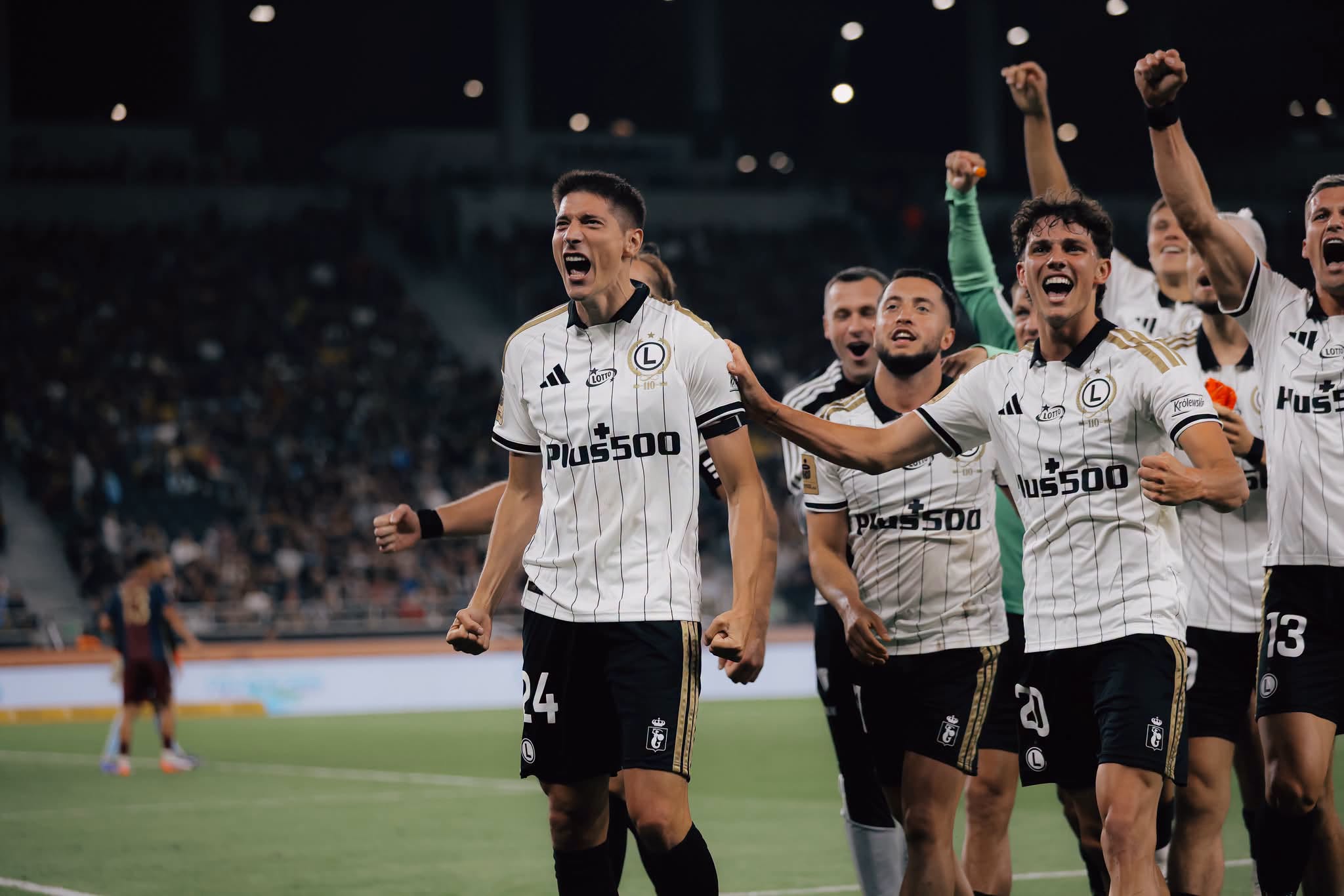
During my time there, we won the Polish Cup, reached the UEFA Conference League quarter-finals, and became the first Polish team ever to win a competitive match in England, beating Chelsea at Stamford Bridge.
Those are moments I will always remember.
Daniel Sobis:
You also gave opportunities to several academy players.
Gonçalo Feio:
That was extremely important to me.
One of the responsibilities of a coach is to leave something behind.
During our time at Legia, twelve academy players made appearances for the first team.
Young Polish players developed, earned opportunities, and eventually secured transfers abroad.
Seeing players continue their careers at clubs like Roma or Strasbourg is incredibly rewarding.
Winning trophies matters. Developing players matters just as much.
Daniel Sobis:
When you look back now, what do you consider your greatest achievement?
Gonçalo Feio:
It is not a trophy.
It is not a single match.
It is the fact that every experience—both the successes and the mistakes—has helped me become a better coach and a better person.
I have made mistakes during my career. I am fully aware of them.
But mistakes only have value if you learn from them.
Today I know I am better prepared than I was one year ago. Better prepared than I was two years ago.
And hopefully next year I will be even better than I am today.
That is what matters most to me: continuous development.
Daniel Sobis:
So you do not define your career by what you have already achieved.
Gonçalo Feio:
No.
I appreciate every trophy, every promotion, and every European night. I am proud of them.
But I do not like living in the past.
The best achievement should always be the next one.
That is what keeps you hungry.
That is what keeps you improving.
And I genuinely believe my best work is still ahead of me.
Inside Legia Warszawa: Leadership, Pressure and Winning
Daniel Sobis:
Let's stay with Legia Warszawa for a moment. You won the Polish Cup, reached the UEFA Conference League quarter-finals and became the first Polish coach to beat Chelsea at Stamford Bridge with a Polish club. Was that the proudest achievement of your coaching career?
Gonçalo Feio:
I've been fortunate throughout my career to work with top-level players. From very early on, I found myself in environments where expectations were high, where international players were the standard, and where clubs competed for trophies and European football. Those experiences prepared me for the responsibility of coaching Legia.
Of course, some moments will always remain special.
Winning at Stamford Bridge against Chelsea was historic—not only because it was the first victory by a Polish club on English soil in European competition, but also because, as a Portuguese coach, Chelsea naturally carries the legacy of José Mourinho. There was something symbolic about that night.
Winning the Polish Cup was equally emotional. The final at the National Stadium is one of the greatest occasions in Polish football. More than 60,000 supporters, the atmosphere, the tradition, and the significance of May 2nd as Poland's Flag Day—all of that made the trophy incredibly meaningful.
Those are unforgettable memories. But they are only milestones. I don't measure my career by looking backwards. I always believe the biggest achievement should still be ahead of me.
Daniel Sobis:
Let's talk about leadership. Managing a dressing room at Legia with international players, experienced professionals and strong personalities isn't easy. What is the key? For a relatively young coach, how challenging was that responsibility?
Gonçalo Feio:
For me, everything starts with one principle: treat people properly.
That sounds simple, but it's actually the foundation of leadership. And treating people properly doesn't mean being soft.
It means demanding the highest standards when it's time to work. Our expectations during training sessions, tactical meetings and match preparation are extremely high. There are no compromises when it comes to professionalism.
But at the same time, you have to support people. You must see the person before you see the footballer.
Daniel Sobis:
What do you mean by that?
Gonçalo Feio:
Soccer players aren't machines. They aren't tools. They're human beings.
Every player has a family, personal challenges, ambitions and fears.
As a coach, you have to understand who they are before asking them to perform. Only then can you bring them into your vision. Only then can they truly believe in the project.
Daniel Sobis:
How important is communication?
Gonçalo Feio:
It's everything.
Players deserve honesty. They deserve clarity. Every player should know exactly what the coach expects from him—especially those who aren't playing.
It's easy to manage the player who starts every weekend.
The difficult conversations are with the players sitting on the bench. Those players also need to understand their role. They need to feel respected. They need to know that even if they aren't playing today, they are still developing and still part of the project.
If they stop believing in that, you lose them.
Daniel Sobis:
Many coaches focus most of their attention on the starting eleven. You seem to believe the opposite.
Gonçalo Feio:
The players who are playing usually don't need as much emotional support. They're happy. They're performing. They feel important.
The players who need you most are often the ones who are struggling.
Maybe they aren't playing. Maybe they have problems at home. Maybe they're injured. Maybe they're fighting with confidence.
Those are the players a coach must stay closest to.
Leadership isn't about standing next to people when everything is going well. It's about standing beside them when things become difficult.
Daniel Sobis:
So demanding and caring aren't opposites?
Gonçalo Feio:
Exactly. They belong together.
You can demand the highest standards because your players know you genuinely care about them.
When people feel respected, they're willing to accept difficult truths.
I would always rather tell a player an uncomfortable truth than a comforting lie.
Honesty builds trust. Trust builds culture. And culture wins soccer matches.
Daniel Sobis:
Looking back, what gives you the greatest satisfaction as a leader?
Gonçalo Feio:
Without hesitation—the relationships I've built with my players.
I've worked with many people throughout my career: presidents, sporting directors, analysts, coaches and staff members.
But if you asked me who would probably speak most positively about me, I believe it would be my former players.
That means more to me than any headline.
Because once someone becomes my player, he remains my player for life.
That relationship doesn't end when we leave the same club.
For me, that is one of the greatest achievements a coach can have.
Professionalism, Talent and the Players Who Made an Impression
Daniel Sobis:
You've spent nearly fifteen years in Polish soccer and worked with hundreds of players. Was there anyone who surprised you the most with his professionalism?
Gonçalo Feio:
I think soccer has changed enormously over the last decade. Today's game demands professionalism.
It's no longer optional.
Sports science, nutrition, psychology, recovery and data analysis have all evolved. If a player wants to compete at the highest level, he has to embrace every aspect of it.
Professionalism today goes far beyond training well. It's a lifestyle.
Daniel Sobis:
What does professionalism mean to you?
Gonçalo Feio:
People often think players work for ninety minutes a day. That's simply not true.
I sometimes ask young players a very simple question:
"How many hours do your parents work every day?"
Most answer, "Eight."
Then I ask them,
"How many hours does a professional footballer work?"
Many still answer,
"Two."
But that's the wrong answer.
Being a professional footballer is a full-time profession.
Your work begins the moment you wake up.
You eat the right breakfast. You prepare your body. You complete injury-prevention work. You spend time with physiotherapists—not only to recover from injuries, but to prevent them. You attend tactical meetings. You analyse opponents. You train. You recover. You eat properly again. You rest. You take care of your mental health.
Everything you do throughout the day contributes to your performance. That's what professionalism means.
Daniel Sobis:
So it's much more holistic than people realise.
Gonçalo Feio:
Exactly.
And balance is essential.
Players also need personal lives.
They need their families. They need time away from soccer.
A happy person is almost always a better performer.
So professionalism isn't about living only for soccer.
It's about finding the right balance between football and life.
Daniel Sobis:
Is there one player who stands out above the rest?
Gonçalo Feio:
Honestly, no.
I've had the privilege of working with international players, experienced professionals, teenagers making their debuts and players preparing for World Cups.
Many of them have been outstanding professionals—but in different ways.
Some because of the way they trained.
Others because of their mentality.
Others because of their consistency over many years.
I don't think it would be fair to single out just one.
Daniel Sobis:
Professionalism isn't only about preparation, though. It's also about performing under pressure.
Gonçalo Feio:
Absolutely.
There's another type of professionalism.
Some players perform brilliantly every day in training.
Others produce their very best when everything is on the line.
Cup finals.
European knockout matches.
Relegation battles.
Promotion deciders.
Playing in front of 70,000 people.
That's another form of professionalism.
The ability to stay calm.
To make good decisions.
To perform when everyone is watching.
Those players are incredibly valuable because pressure never changes who they are.
Daniel Sobis:
You've coached many talented Polish players.
Who would you describe as the best Polish player you've worked with?
Gonçalo Feio:
Sebastian Szymański.
Watching his development from the academy to becoming an international player has been a privilege.
He had exceptional quality.
But perhaps even more importantly, he had the mentality to keep improving.
Daniel Sobis:
And the most intelligent player you've coached—not necessarily Polish?
Gonçalo Feio:
Football intelligence comes in many forms.
There isn't just one type.
Some players understand space.
Others understand timing.
Others understand leadership.
But if we're talking about vision and understanding of the game, I'd say Josué.
His football IQ was truly exceptional.
Daniel Sobis:
Who was the hardest worker on the training pitch?
Gonçalo Feio:
Ryoya Morishita.
His intensity was unbelievable.
Sometimes it felt as though he could play three matches in a row without slowing down.
Every training session.
Every sprint.
Every duel.
The energy he brought every single day was extraordinary.
Daniel Sobis:
What about the best young Polish talent today?
Gonçalo Feio:
That's actually a very difficult question.
Because first we have to define what talent really means.
Many people immediately think of technical ability or attacking flair.
But football talent comes in many different forms.
Take Jan Ziółkowski, for example.
I had the privilege of giving him his professional debut and helping him develop before his move to AS Roma.
His defensive intuition is an extraordinary talent.
His anticipation.
His understanding of space.
His decision-making.
Those qualities are every bit as valuable as dribbling or scoring goals.
And then there's mentality.
Some players have exceptional confidence at a very young age.
Others have incredible competitiveness.
Those qualities are talents too.
That's why I find it difficult to choose only one player.
Daniel Sobis:
Still, there are several exciting names emerging.
Gonçalo Feio:
Absolutely.
Oskar Pietuszewski is developing very well at FC Porto.
He's another example of how Polish players are beginning to establish themselves in Portuguese football.
There are more and more young Polish players attracting attention abroad.
That's an excellent sign for the future of Polish soccer.
Because talent alone is never enough.
Talent has to be developed.
And I believe Poland is becoming increasingly successful at doing exactly that.
Unfinished Business, Portugal and What's Next
Daniel Sobis:
Let's finish the Polish chapter with one final question. Do you feel you have unfinished business in Poland? If the right project came along, would you consider returning?
Gonçalo Feio:
Poland will always be a special place for me.
I'm living in Lisbon again—my hometown—but my connection with Poland goes far beyond soccer.
My wife is Polish. My daughter was born in Poland. My closest friends are there.
Professionally and personally, it's a country that has shaped my life.
Just a few days ago I was speaking at a UEFA Pro coaching conference in Poland, and I was asked this same question several times.
My answer is always the same: that connection will always exist.
Daniel Sobis:
So you don't see your time in Poland as a closed chapter?
Gonçalo Feio:
Not at all.
Poland is now one of the ten strongest leagues in Europe according to the UEFA rankings.
More clubs are competing in European competitions every year.
The league continues to grow.
For someone like me, who loves international football and European competition, that's incredibly exciting.
European nights are something special.
Those matches bring together different football cultures, different tactical ideas and different ways of thinking about the game.
That's one of the things I enjoy most as a coach.
Daniel Sobis:
Do you think you'll return one day?
Gonçalo Feio:
I genuinely believe I will.
Whether that's with a club—or perhaps even a national team—I don't know.
But I believe our paths will cross again one day.
The emotional connection is simply too strong.
Daniel Sobis:
Would that happen in your next job?
Gonçalo Feio:
Probably not.
I'm at a stage in my career where I'm open to working in many different countries.
For me, the key isn't geography—it's alignment.
The club's vision.
Its leadership.
Its ambition.
Its methodology.
If my coaching staff and I believe our ideas fit the project, we're ready to work almost anywhere.
That's the exciting part of football.
Daniel Sobis:
But if a Polish club called tomorrow...
Gonçalo Feio: (laughs)
Let's just say there are probably two clubs that, if they called, would certainly make me think very carefully.
We would have an important conversation.
I'll leave everyone wondering which two those are.
Liga Portugal Through Gonçalo Feio's Eyes
Daniel Sobis:
At beIN SPORTS USA we broadcast not only the Ekstraklasa but also Liga Portugal. Last season you coached Tondela, so you know the league inside out.
For American viewers who may not watch Portuguese football every week, what makes Liga Portugal special?
Gonçalo Feio:
The first thing American fans need to understand is that Portuguese football is almost the opposite of MLS.
MLS is built around competitive balance.
Salary caps.
Drafts.
Financial regulations.
Every club starts the season believing it has a chance.
Portugal isn't like that.
Historically, only a handful of clubs have won the league.
In the modern era, it's essentially been dominated by Benfica, Sporting and FC Porto.
That reality shapes the competition.
Daniel Sobis:
So where does the excitement come from?
Gonçalo Feio:
From development.
Portugal has one of the best football development systems in the world.
It's one of the world's leading exporters of players and coaches.
Every season, talented players arrive from South America, Africa and across Europe.
They improve.
They grow.
They compete in European football.
Eventually, many are sold to some of the biggest clubs in the world.
That's the model.
Daniel Sobis:
And clubs outside the traditional "Big Three" are becoming stronger as well.
Gonçalo Feio:
Absolutely.
Braga have become one of the most impressive projects in Portugal.
Famalicão continues to develop and sell outstanding players.
Vitória Guimarães remains one of the country's great historic clubs.
Gil Vicente has also built an excellent football structure.
These clubs know exactly who they are.
They don't try to imitate Benfica or Porto.
They build sustainable projects.
They develop players.
They create value.
That's why Portuguese football remains so competitive despite the financial gap.
Daniel Sobis:
You've often said that football itself is always the main attraction in Portugal.
Gonçalo Feio:
Yes.
In Portugal, people go to the stadium primarily to watch the game.
There isn't a huge entertainment show surrounding the match.
The football itself is the event.
The tactical battle.
The atmosphere.
The game.
That's where the focus remains.
It's a different culture from many other countries, including the United States.
And I believe that's one of the reasons Portuguese football continues producing so many coaches.
Football is discussed every single day.
On television.
In newspapers.
On the radio.
Everyone talks about tactics. Everyone talks about the game.
That creates a unique football culture.
Daniel Sobis:
And that's exactly the environment where coaches continue to evolve.
Gonçalo Feio:
Exactly.
Football grows where people never stop thinking about football.
Daniel Sobis:
Let's finish with a topic that connects both of your football worlds.
We now have several Polish players at Portugal's biggest clubs—Oskar Pietuszewski, Jan Bednarek and Jakub Kiwior at FC Porto, and Jakub Kamiński at Benfica.
Is this becoming a trend?
Gonçalo Feio:
I believe it is.
And I think the first players who arrived deserve enormous credit.
Bednarek and Kiwior represented Polish football exceptionally well.
Their professionalism. Their mentality. Their work ethic. Their willingness to learn.
All of that helped build an outstanding reputation for Polish players in Portuguese football.
When clubs have positive experiences with one group of players, they're naturally more willing to recruit others.
Daniel Sobis:
So they opened the door?
Gonçalo Feio:
Exactly.
Once Porto saw the quality of those players—not only their football ability, but also their character—it became much easier to invest in another talented young Polish player like Oskar Pietuszewski.
He's arrived in an excellent environment.
He has experienced Polish teammates around him.
He has coaches who trust young players.
And he's responded extremely well.
He's producing.
He's developing.
He's making the most of his opportunity.
That's exactly what Portuguese football is designed to do.
Daniel Sobis:
What characteristics make Polish players attractive to Portuguese clubs?
Gonçalo Feio:
Several.
First, professionalism. Second, intensity. Third, humility.
Polish players generally want to improve every single day.
They work hard.
They put the team first.
Physically, they're usually very well prepared.
When you combine those qualities with the tactical education players now receive in modern Polish football, you get footballers who can adapt successfully to the Portuguese league.
Daniel Sobis:
And the relationship works both ways now.
Gonçalo Feio:
Absolutely.
For many years, Polish clubs mainly looked west for inspiration.
Now they're also bringing players directly from Portugal.
That's another sign of how much the Ekstraklasa has grown.
Portuguese football develops technically gifted players with a strong tactical education.
Polish clubs increasingly recognise that value.
At the same time, Portuguese clubs are beginning to appreciate the mentality and professionalism of Polish players.
The exchange benefits both countries.
Daniel Sobis:
You've probably become one of the links between those two football cultures.
Gonçalo Feio: (smiles)
I'd like to think so.
I've spent almost half of my life in Polish football.
Now I'm back in Portugal.
If I've helped strengthen the relationship between the two countries—even in a small way—then that's something I'm very proud of.
Football has given me two homes.
And I hope I'll continue building bridges between them.
Portugal at the World Cup
Daniel Sobis:
One of the biggest surprises at the World Cup was Portugal's early exit.
Expectations were enormous, but the team was eliminated by Spain in the Round of 16.
From your perspective, what went wrong?
Gonçalo Feio:
As a coach, I always try to be careful when analysing another team's work.
The truth is that no one outside the dressing room has access to all the information needed to make a complete assessment.
We don't know every conversation.
We don't know the daily training process.
We don't know the emotional state of the players.
We don't have access to all the performance data.
Any opinion from the outside is inevitably incomplete.
That said, I do believe every successful team begins with one thing:
Culture.
Daniel Sobis:
What do you mean by culture?
Gonçalo Feio:
Culture is everything.
It's the way a team behaves.
The way it trains.
The way it competes.
The way players interact with one another.
The way everyone understands their role within the project.
Football is a team sport.
That means the team must always come first.
Every player, regardless of status or reputation, has to understand that.
When the culture is strong, individual talent becomes even more powerful.
Daniel Sobis:
And you don't think Portugal managed to create that?
Gonçalo Feio:
From the outside, that wasn't the impression I had.
Again, I don't know everything that happened internally.
But watching the tournament, I never felt that the team project became stronger than the individuals.
That's always a difficult balance for national teams because they spend so little time together.
Building a strong culture takes time. Clubs have that time. National teams often don't.
Daniel Sobis:
Do tournaments also favour a certain style of football?
Gonçalo Feio:
Absolutely.
Short tournaments have their own dynamics.
Teams built around intensity, physicality and direct play often make a strong impression early on.
But as the tournament progresses, teams with more sophisticated playing models usually become stronger.
Spain is the perfect example.
They grow into tournaments.
Their positional understanding, control of possession and tactical maturity become increasingly influential with every match.
Those qualities are difficult to build quickly.
That's why teams with a clear football identity often become stronger as the knockout stages progress.
Daniel Sobis:
Portugal never reached that point.
Gonçalo Feio:
Exactly.
Being eliminated in the Round of 16 means you never really have the opportunity to build that momentum.
But every tournament—whether successful or disappointing—should be an opportunity to reflect.
Even after winning trophies, federations should evaluate what worked and what didn't.
That's how football evolves.
Daniel Sobis:
So where does Portugal go from here?
Gonçalo Feio:
Every new cycle should begin with the same question:
"Who do we want to be?"
Before discussing formations...
Before discussing tactics...
Before selecting players...
You have to define your identity.
Your values.
Your behavioural principles.
Your football philosophy.
Only once those strategic decisions have been made can you move on to operational questions such as systems, player selection and match preparation.
Everything starts with identity. Everything else comes afterwards.
Quick Fire Questions
Best stadium in Poland?
Gonçalo Feio:
Legia Warszawa.
The atmosphere there is truly special.
Toughest away atmosphere you've experienced in Poland?
Gonçalo Feio:
That's a difficult one.
There are several.
But if I had to choose one,
I'd probably say Górnik Zabrze.
Best Polish player you've coached?
Gonçalo Feio:
Sebastian Szymański.
Best Polish coach?
Gonçalo Feio: (laughs)
That's the one question I'm going to avoid.
Every coach works in a different environment, with different resources and different challenges.
Context matters too much for me to choose just one.
José Mourinho or Pep Guardiola?
Gonçalo Feio:
As a Portuguese coach...
José Mourinho.
Although I deeply admire Guardiola's football.
Win 1–0 or 4–3?
Gonçalo Feio: (smiles)
Earlier in my career,
I probably would have said 1–0.
Today?
4–3.
Football belongs to the people. It should entertain.
One club you dream of coaching?
Gonçalo Feio:
A club capable of winning the UEFA Champions League.
Daniel Sobis:
Come on... give me a name.
Gonçalo Feio: (laughs)
Chelsea.