
Palmeiras and Estudiantes set for Copa Lib final
Palmeiras will seek to extend Brazilian dominance of the Copa Libertadores when it faces Argentina's Estudiantes in Sunday's (AEDT) final when contrasting models of South American football will compete for the continent's biggest club prize.
Argentina and Brazil are level on 25 Libertadores titles each. However, if Palmeiras wins, it will not only break the deadlock, but also make it eight consecutive years that a Brazilian club has lifted the trophy.
The final at Estadio Centenario in Montevideo also revives a historic meeting at the same stadium. Estudiantes beat Palmeiras in the 1968 final on its way to three consecutive titles, before adding a fourth crown in 2009.
Palmeiras arrives as the favourite this time around, however, with the squad depth and financial strength that has made it a formidable contender in South America under Portuguese coach Abel Ferreira.
Ferreira has won 11 trophies since taking charge in 2020 and has turned Palmeiras into one of the continent's most consistent teams.
A fourth Libertadores crown would further establish the club as the leading Brazilian force of the modern era.
Palmeiras has also invested heavily while continuing to profit from the sale of academy products to Europe.
Endrick, Estevao and Allan Elias have all left in recent years, helping Palmeiras generate funds to retain and recruit experienced players such as captain Gustavo Gomez and Brazil midfielder Andreas Pereira.
Gomez provides authority at the back, while Pereira brings control and experience in midfield.
Palmeiras's route to Montevideo has tested that experience. Goalkeeper Carlos Miguel was its semi-final hero against Fluminense, saving penalties in the shootout to send Ferreira's side through.
The Brazilian side knows the demands of a one-off final at the Centenario. Palmeiras beat Flamengo there in the 2021 final, but Estudiantes's history means it is unlikely to be overawed by the occasion.
Estudiantes heads to Uruguay as Argentina's standard-bearer, with its own history and defiance.
Coach Alexander Medina's side carries the identity of a club long associated with tactical discipline, intensity and a willingness to embrace the most difficult moments.
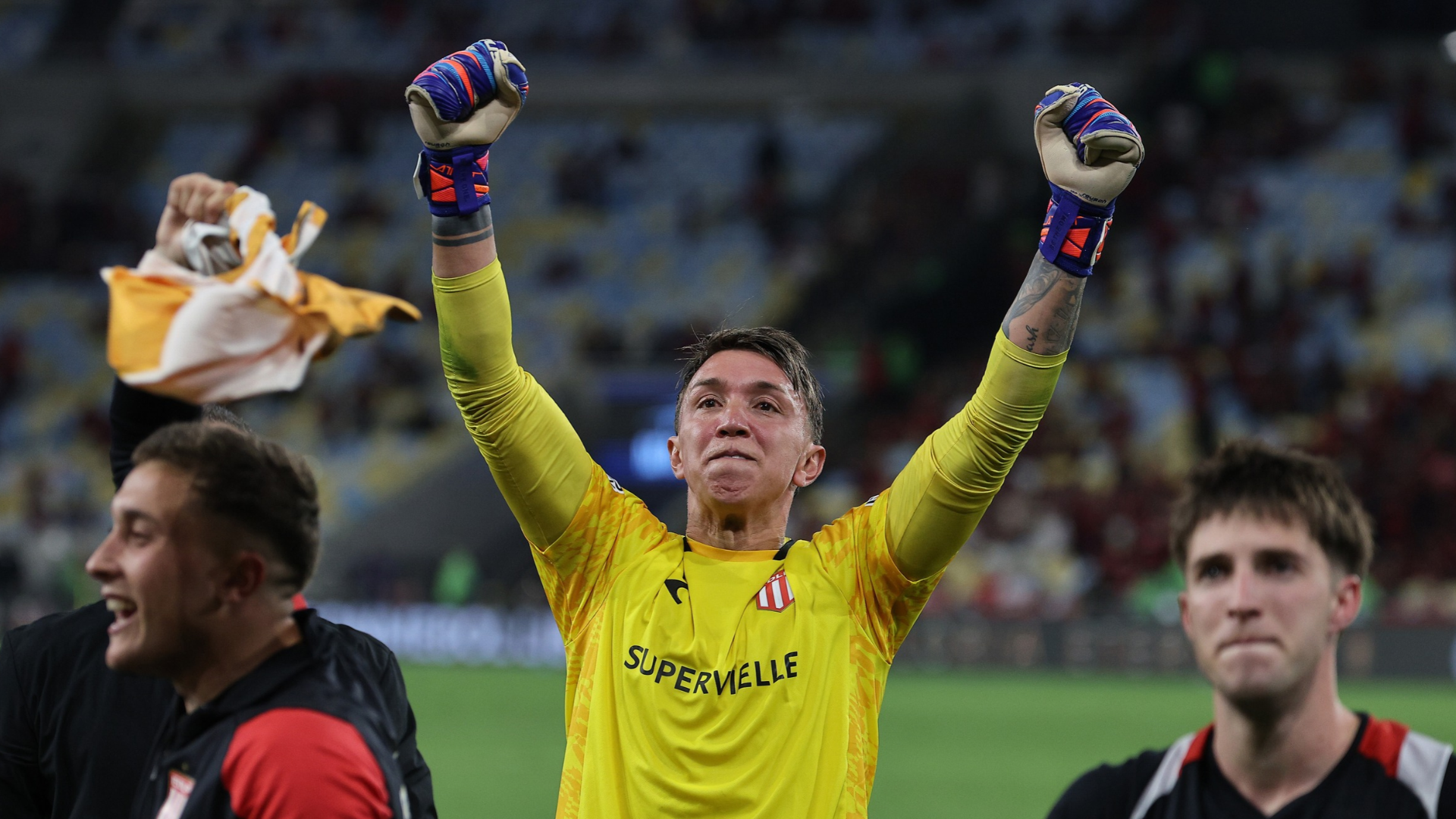
That character was evident in the semi-finals, when Estudiantes held Flamengo to two scoreless draws before winning the shootout at the Maracana.
Uruguay goalkeeper Fernando Muslera was the key figure, saving three penalties to take Estudiantes to the final. The 40-year-old will now play for South America's biggest club prize in his home city.
"It will be nice to return home and play the final in another temple of football like the Centenario," Muslera said after the win over Flamengo.
Estudiantes's progress was briefly overshadowed by uncertainty surrounding the eligibility of defender Marcos Rojo.
The club sought to register him as an injury replacement after the Argentinean transfer window had closed, and South American football's governing body, CONMEBOL, initially rejected the request.
The Court of Arbitration for Sport then provisionally cleared Rojo to play before the second leg against Flamengo, prompting the Brazilian club to file a protest after the match. CONMEBOL's disciplinary body ultimately rejected the protest.
Rojo's leadership and aggression could be vital against Palmeiras's attack, while Muslera gives Medina's side a goalkeeper accustomed to the pressure of decisive matches.
The final will test whether Palmeiras's resources and tournament pedigree can overcome Estudiantes' structure and competitive edge.