
Inside Górnik Zabrze’s Ambitious Project: Łukasz Milik on Podolski, Transfers and the Club’s European Future
Podolski’s Górnik Zabrze Accelerates Its Project: Transfers, Youth Development and European Ambitions
Górnik Zabrze are building a project designed to put the historic Polish club back among the country’s best and establish them as a regular presence in European football. In an exclusive interview with beIN SPORTS, sporting director Łukasz Milik discusses the club’s long-term vision, his close working relationship with Lukas Podolski, the stories behind recent signings such as Peter Federico and Paulo Bernardo, and why Górnik chose to keep several key players despite offers during the latest transfer window. Milik also reflects on the club’s European experience this season, the development of Kacper Urbański and the challenges ahead in the Ekstraklasa.
THE PROJECT BEHIND GÓRNIK ZABRZE
Daniel Sobis: What is Górnik Zabrze today? Is this a club that wants to compete for the Polish championship, a club that wants to establish itself in European competitions? What exactly is the project?
Łukasz Milik: It is a project that has been developing over the last few years. The club has come a long way after going through a very difficult period. There were moments when the situation was really challenging, but we managed to stabilize the club and start moving in the right direction.
We had to do that by using our own resources and operating within our own budget. That was very important to us. The club had to become properly organized and structured - not only from a sporting perspective, but also financially and structurally.
Today, all the different areas of the club are connected. We want to develop players, identify interesting young talents, improve them and sell them. For this model to work, everything has to function as one system – the scouting department, recruitment, coaching staff, academy and first team.
We understand that player sales help us build stronger foundations for the club. We want to show other clubs, agents and players that Górnik is a good place for players to develop. The revenue generated from transfers also allows us to build a more stable club that can gradually afford to do more.
We have our own vision, and we have people working every day to make the club better. And we don't intend to stop here.
RECRUITMENT AND DECISION-MAKING
Daniel Sobis: How much influence does the club have when it comes to deciding which players to bring in? Is there sometimes a conflict between what you want and what the coaching staff wants?
Łukasz Milik: Of course, these situations do happen. Each of us looks at a player from a slightly different perspective. The coach primarily evaluates a player in terms of the team's needs and how he can function on the pitch, while we also look at the broader picture - the player's potential, development, profile, contract situation and what is possible within the club's circumstances.
That is why it is so important for us to bring these different perspectives together. We don't make decisions based on one person's opinion. We discuss the player, analyze all the relevant aspects and try to find a solution that is best for both the team and the club as a whole.
Sometimes we have a similar view from the beginning, while at other times we need more discussions to reach a common position. That's a natural part of the process. Ultimately, we all have the same goal - to make the best possible decisions for Górnik within the conditions in which we operate.
And that's exactly what makes this job so interesting. Every situation is different, and the market is constantly changing.
GÓRNIK'S TRANSFER STRATEGY
Daniel Sobis: How did the players who arrived at Górnik this summer come onto your radar? Were they players you had been following for a long time, or did some of these opportunities come up unexpectedly?
Łukasz Milik: Our approach has changed. If we had been in a different financial situation, perhaps five months ago, we would have been looking at a completely different group of players - probably more expensive players from the market.
But over the last few months, from May through the end of the transfer window, we had to adjust our strategy. We started looking much more closely at players who represented opportunities, players who could develop here and who we believed could become valuable for the club.
We knew exactly what kind of players we were looking for.
And, of course, every transfer has its own story. Transfers are difficult. You need good contacts, good relationships with other clubs, agents and representatives, and you need people who understand the market.
There is never one simple reason why a transfer happens. Every deal has its own story.
LUKAS PODOLSKI'S ROLE AT GÓRNIK
Daniel Sobis: How would you describe your working relationship with Lukas Podolski? Where does his role begin and end when it comes to the sporting side of the club, particularly recruitment and transfers?
Łukasz Milik: We work very closely together, but we also have clearly defined responsibilities. We discuss players, situations and different markets, and Lukas can be very helpful when his experience or his contacts can give us an additional perspective.
Sometimes I give him a list of players and ask him to take a closer look. Sometimes he brings something to my attention. It's a two-way relationship.
But it's important to say that Lukas is not responsible for every transfer. We have our own scouting and recruitment process, and the final decisions are made within the club.
At the same time, his experience, his network and his understanding of football are extremely valuable to us. Having someone with his background involved in the project gives us a different perspective, and we try to use that in the best possible way for Górnik.
THE STORIES BEHIND FEDERICO AND PAULO BERNARDO
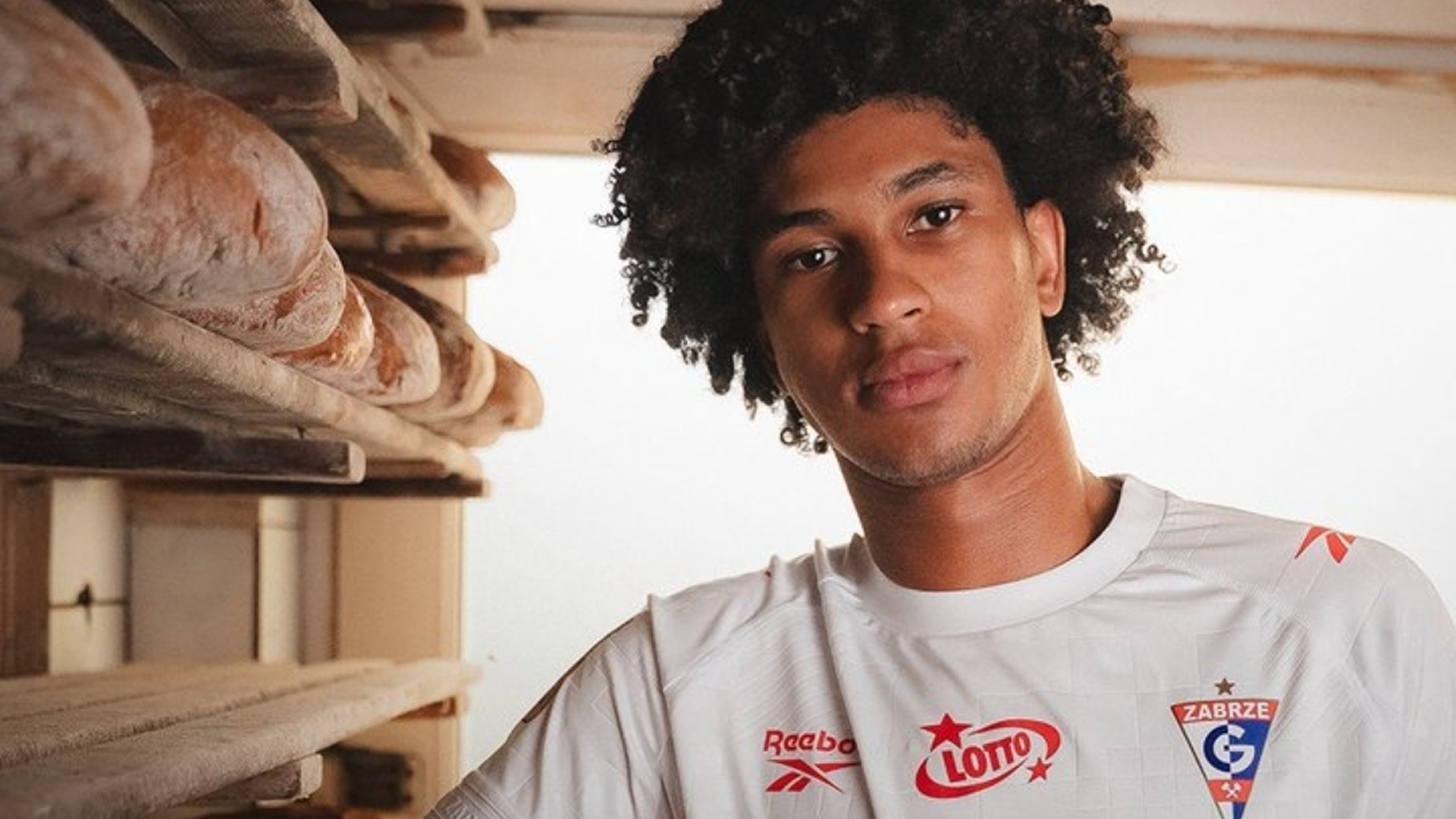
Daniel Sobis: Let's talk about two of your most interesting signings, Peter Federico and Paulo Bernardo. How did Górnik manage to pull off deals like these? Were these players you had been targeting for a long time, or were they opportunities that suddenly opened up and you were able to take advantage of them?
Łukasz Milik: In both cases, it was about opportunity, timing and contacts. These were not transfers where we had been working on the players for a year or two. The right moment came, and we were ready to act.
In football, sometimes a situation opens up for a very short period of time. You need to have the right contacts, you need to know the market, and then you have to move quickly. That's what happened with both Federico and Paulo Bernardo.
They were opportunities that we recognized, and we managed to take advantage of the moment.
Of course, there is always a lot of work behind a transfer. You have to convince the player, speak with the club, understand the financial conditions and make sure everything fits your project. But in these two cases, the timing was particularly important.
We saw the opportunity, we moved quickly, and fortunately, we were able to get both deals done.
KACPER URBAŃSKI'S DEVELOPMENT
Daniel Sobis: Let's talk specifically about Kacper Urbański. He's a player with enormous talent and a very interesting background, but he was coming to Górnik after a difficult period at Legia. What convinced you that this was the right environment for him to get back on track and show his real potential?
Łukasz Milik: We saw a player who had a lot of talent, but at the same time needed the right environment and the right people around him. Sometimes a young player just needs someone to believe in him again and give him the confidence to play.
We knew Kacper's qualities. We knew what kind of player he could become. But we also understood that he needed a place where he could feel comfortable, where he could play, develop and regain that confidence.
That's what we try to offer at Górnik. When a young, ambitious player comes here, we want him to feel the support — from the coaching staff, from the club, from his teammates and from the fans.
You can see how important that environment is in Zabrze. The support is very strong, and it's a place where a player can really feel that people are behind him.
Kacper is still young. We don't want to put too much pressure on him. We want to give him the conditions to play, develop and show what he can do.
And hopefully, together, we can help him get back to the level we know he's capable of reaching.
WHY GÓRNIK KEPT KEY PLAYERS
Daniel Sobis: During the last transfer window, did you receive offers for some of your players that you ultimately decided not to accept? And was it also important that the players themselves wanted to stay at Górnik?
Łukasz Milik: Yes, we received offers for several players, but in some cases we decided that it was better for the club and for the players to continue together.
What was important for us was that the players themselves also wanted to stay. They feel good here, they believe in the project and they see that they can continue developing at Górnik.
So it wasn't a situation where we had to convince them to stay. They wanted to stay, and we also believed that keeping them was the right decision.
Of course, when offers come in, you always have to look at the financial side. That's part of football, especially for a club like Górnik. But you also have to think about the sporting side and the player's development.
Sometimes the best decision isn't to sell immediately. Sometimes it's better to keep a player, give him another six months or a year, let him develop further and see where the situation takes you.
In this case, we decided together that staying was the best option, for the club and for the players.
GÓRNIK'S AMBITIONS FOR THE FUTURE
Daniel Sobis: What are the ambitions when you sit down in your office and talk about the future? Is winning the Polish championship or the Polish Cup something you discuss internally?
Łukasz Milik: Of course we have ambitions. We want to be the best club we can be, and we want to improve every year.
But we don't want to put artificial limits or specific targets on ourselves just for the sake of saying them publicly. We are building something, and we want to do it properly.
When we talk internally, we discuss all of these possibilities. But we also have to be realistic. We are not yet at the point where everything is 100 percent stable and functioning exactly as we want it to.
So we have to continue working. The objectives will become clearer as the project develops.
LESSONS FROM EUROPEAN FOOTBALL
Daniel Sobis: How much did the experience of playing in Europe this season teach you? How much can a club like Górnik learn from competing against European opposition?
Łukasz Milik: A lot. It has been a very valuable experience - not only for the team and the club, but also for me personally as Sporting Director.
We played against strong European teams, and you can immediately see the differences in some areas - the intensity, the speed of the game, the organization and the quality of individual players. At the same time, you also see what is needed off the pitch at this level - in terms of preparation, planning, recruitment and how the whole sporting department works.
For me personally, these games gave me a different perspective on how we should build the club. You can compare the way we work with clubs at a higher level, see what we do well, where we still have gaps and what we need to improve. This experience helps me make better decisions and, I hope, makes me a better Sporting Director.
At the same time, these games showed us that we can compete against teams like this. That is very important for both the club and the players. European football gives you a completely different perspective, and you can learn a lot from these games, regardless of the final result.
The most important thing is to take these lessons back into our everyday work and use them to keep developing Górnik.
PREPARING FOR JAGIELLONIA
Daniel Sobis: Łukasz, now you're preparing for the game against Jagiellonia. What will be the biggest challenge for Górnik in that match?
Łukasz Milik: First of all, we have to get back into our rhythm.
During the international break, we had a lot of players away with their national teams. We had players traveling from different countries and different continents, so we weren't able to work with the whole group.
Now everyone is coming back, and we're trying to return to the rhythm we had before the break.
We know our players and we know what they're capable of. Now we have to put everything together again and be ready
You may also be interested in: