
Official: Xavi Hernández Named New Netherlands Head Coach
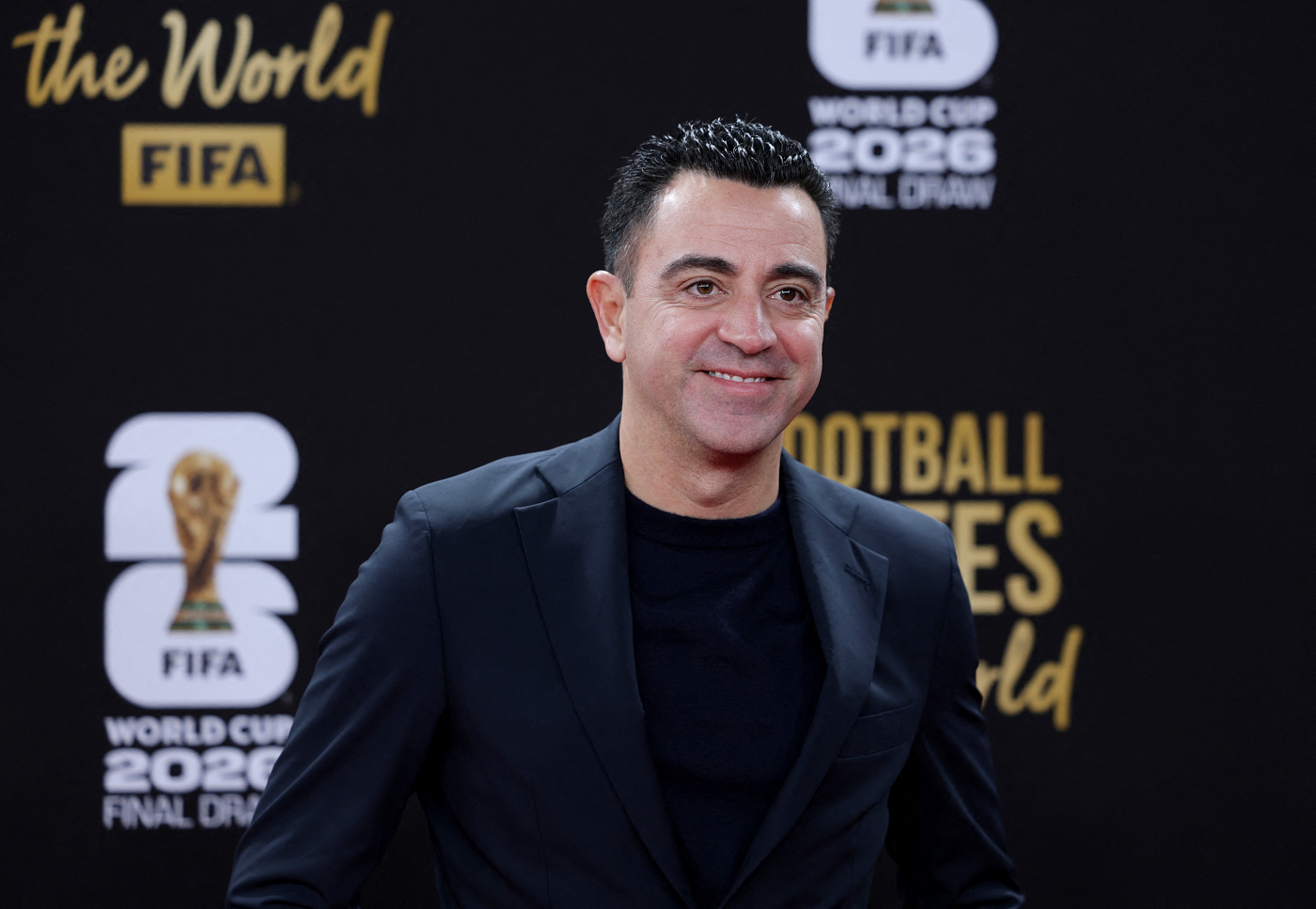
What was only a possibility a few hours ago is now a reality. Xavi Hernández is returning to the sidelines, and he will do so in a place that, because of its history and soccer philosophy, seems almost tailor-made for him.
The Netherlands have officially announced the former FC Barcelona manager as their new national team head coach. The Spanish coach replaces Ronald Koeman and begins his first experience in charge of a national team.
At 46, Xavi returns to coaching after his time with Barcelona came to an end in 2024.
But beyond his name and what he represents as a coach, there is a soccer connection that is impossible to ignore.
Xavi is heading to the country that helped change forever the way the game is understood.
Xavi, an Heir to Cruyff’s School
Talking about Xavi Hernández inevitably leads back to Johan Cruyff.
Not because Xavi played directly under him, but because he developed as a player within an FC Barcelona structure that Cruyff profoundly transformed.
Possession, space, numerical superiority, pressing immediately after losing the ball and the need to control matches through possession are all part of a philosophy with deep Dutch roots.
The Netherlands captivated the world in 1974 with a team coached by Rinus Michels and led on the field by Cruyff.
The famous Clockwork Orange failed to lift the FIFA World Cup, but it left behind a legacy that went far beyond the final result.
Total Football replaced rigid positions with constant movement, intelligent occupation of space and players capable of performing different roles within the same match.
Decades later, much of that philosophy found a new evolution in Barcelona.
From Cruyff to Guardiola, With Xavi as the Conductor
The connection became even stronger with Pep Guardiola’s FC Barcelona.
Guardiola took many of the principles Cruyff had established at the club and pushed them to another level: long spells of possession, positional play, immediate pressing after losing the ball and a constant search for numerical superiority.
And at the center of that machine was Xavi Hernández.
Alongside Andrés Iniesta and Sergio Busquets, Xavi became the conductor of one of the greatest teams in soccer history.
He did not need to run more than everyone else.
He needed to think faster than everyone else.
His ability to read space, accelerate or slow down the tempo and constantly find the open teammate turned the midfielder into one of the greatest representatives of that philosophy.
Now, he will have the opportunity to bring his own interpretation of those ideas to one of the places where the revolution began.
How Could the Netherlands Play Under Xavi?
His time as Barcelona manager made his intentions quite clear.
Xavi wants the ball.
His teams look to build from the back, create numerical advantages in midfield, stretch the field with their wingers and occupy spaces intelligently to constantly create passing lanes.
But possession is not simply an attacking tool.
It is also a way to defend.
When his team loses the ball, Xavi wants it back quickly to keep the opposition as far away from his own goal as possible. It is a philosophy that connects perfectly with many of the historic principles of Dutch soccer.
The biggest challenge will be adapting those ideas to the international game.
Xavi will not have months of training sessions to develop automatic movements. He will have short international camps and only a few days to communicate his concepts before each match.
That means he will need to find a balance between his positional soccer and the verticality that has also historically made the Netherlands so dangerous.
Why Could Xavi Fit the Netherlands?
The biggest advantage is that he would not have to start from scratch.
The Netherlands retains a soccer identity historically built around possession, playing out from the back and developing technically gifted players capable of interpreting different positions.
For Xavi, that environment could be ideal.
He would not arrive to impose a completely foreign philosophy, but rather to reinterpret principles that already form part of the Oranje’s own history.
Managing a national team also presents a different challenge from club soccer. There are fewer training sessions, less time to make corrections and a much greater need to communicate tactical concepts quickly.
That would force Xavi to simplify his ideas.
The challenge would be finding the right balance between the positional soccer that characterizes the Spanish coach and the verticality that has historically made the Netherlands so dangerous.
Xavi Replaces Koeman Once Again
There is also an interesting twist that is difficult to overlook.
This will be the second time Xavi Hernández has replaced Ronald Koeman.
In November 2021, he took over at FC Barcelona following the Dutchman’s departure.
Now, history repeats itself.
But this time, Xavi is taking charge of Koeman’s own national team.
The Spaniard returns after being away from the sidelines since 2024. During his spell as Barcelona manager, he won LaLiga and the Spanish Super Cup, after beginning his coaching career with Al-Sadd.
Now, an entirely different challenge begins.
Total Football Returns to One of Its Heirs
Perhaps the most fascinating part of Xavi’s appointment is the way it closes the historical circle connecting Barcelona and Dutch soccer.
The Netherlands captivated the world with the Total Football of Rinus Michels and Johan Cruyff in 1974.
Cruyff later brought much of that philosophy to FC Barcelona.
Pep Guardiola took that legacy and perfected it, with Xavi serving as the conductor on the field.
And now Xavi arrives with all those influences at the place where much of that idea was born.
This time, he is no longer a candidate.
Xavi Hernández is officially the new head coach of the Netherlands.
And now he will have the opportunity to write his own chapter in a soccer philosophy that has connected the Oranje and Barcelona for more than half a century.