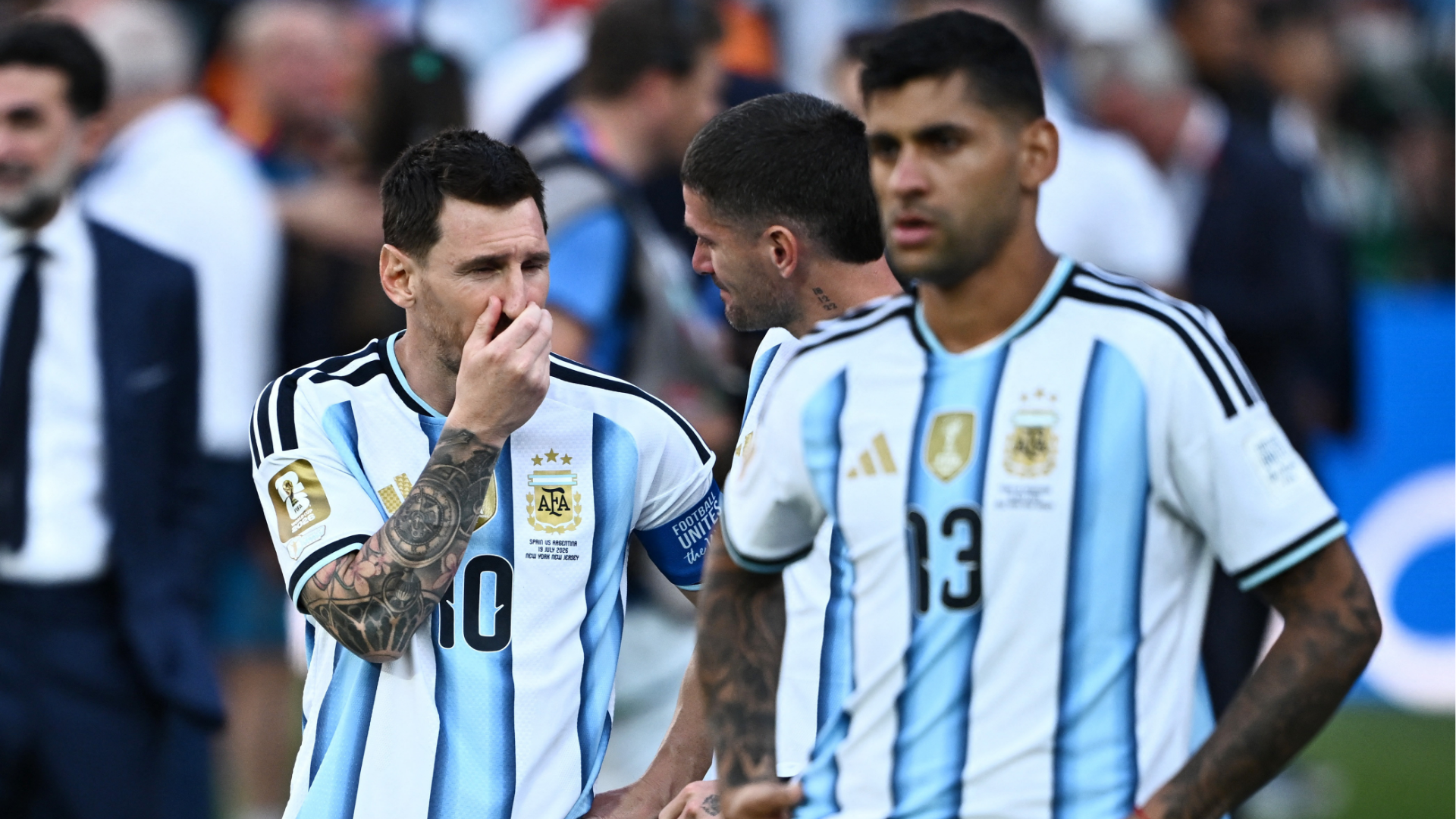

According to Infobae and other Argentine media outlets, Jorge Messi, father and agent of Lionel Messi, has died at the age of 68 after facing various health problems in recent months.
- Home >
- Soccer >
- Jorge Messi, Father and Agent of Lionel Messi, Has Died at 68: Here Is What Is Known
Jorge Messi, Father and Agent of Lionel Messi, Has Died at 68: Here Is What Is Known
According to Argentine media outlets, Jorge Messi, the father and representative of Lionel Messi, has died at the age of 68 after facing health issues known only in detail by his closest relatives.
Reports indicate that Jorge Messi passed away on the night of Friday, August 7, at a clinic in Rosario, Argentina. So far, the Messi family has not issued a public statement regarding the news.
Throughout 2026, Jorge Messi experienced a delicate health condition that even led to his hospitalization in Rosario. Later, Lionel Messi revealed that his father would travel with him to the United States to seek a second medical opinion, while the family handled the matter with complete discretion.
Who Was Jorge Messi?
Jorge Horacio Messi was much more than the father of Argentina's World Cup-winning captain.
He was first the pillar of the Messi family in Rosario and later became one of the driving forces behind Lionel Messi's career. He accompanied his son to training sessions at Newell's Old Boys and made one of the most important decisions in the player's life: traveling to Spain in pursuit of Lionel's dream of becoming a professional footballer.
Over time, Jorge not only supported Lionel as a father but also played a crucial role as his representative, helping manage his career throughout his spells with Barcelona, Paris Saint-Germain and Inter Miami.
The Napkin That Changed Football History
As a child, Lionel Messi was diagnosed with growth hormone deficiency.
Despite the uncertainty and sacrifice involved in leaving Argentina behind, Jorge Messi believed in his son's talent and pursued Barcelona's interest.
At just 13 years old, Lionel traveled to Spain with his father for a trial with the Catalan club. Carles Rexach, Barcelona's sporting director at the time, quickly recognized the youngster's extraordinary potential.
Following an informal meeting after a tennis match, Rexach drafted what would become one of football's most iconic documents.
"In Barcelona, on December 14, 2000, and in the presence of Messrs. Minguella and Horacio, Carles Rexach, FC Barcelona's sporting secretary, commits under his responsibility and despite some opinions to the contrary to sign player Lionel Messi, provided that the agreed conditions are maintained."
Written on a simple napkin, the document also guaranteed the young Messi's hormonal treatment and marked the beginning of a journey that would forever change football history.