
Germany’s Shocking Elimination at the 2018 World Cup
World champions often seem to carry a curse. A debt that football collects four years after they have reached the summit. Germany at the 2018 FIFA World Cup in Russia became another example, suffering one of the most shocking eliminations in World Cup history.
The Mannschaft arrived at the tournament as one of the favorites to lift the trophy. After conquering the world at Brazil 2014, Joachim Löw’s side appeared to have everything needed to become the first back-to-back world champion since Brazil in 1962.
Their qualifying campaign had been flawless. Germany played 10 matches, won all 10, scored 43 goals, and conceded just four. They were a footballing machine. On top of that, they had gone 19 matches without defeat since UEFA Euro 2016, a run that reinforced the belief that they were destined to successfully defend their crown.
However, warning signs had already started to emerge, and few paid attention.
The final two matches of 2017 raised concerns. A scoreless draw against England at Wembley and a 2-2 draw with France in Cologne were dismissed as routine friendlies. Yet behind the results was something more troubling: the team no longer looked the same.
The trend continued in 2018. Germany drew with Spain in Düsseldorf, lost to Brazil in Berlin, and suffered a painful defeat against Austria in Klagenfurt. Suddenly, the reigning world champions had gone five consecutive matches without a win, and alarm bells were beginning to ring.
A hard-fought 2-1 victory over Saudi Arabia in Leverkusen, just days before their World Cup opener, did little to silence the doubts. Even so, they were still the defending champions, and few were willing to count them out.
A growing trend also loomed over Germany. Italy won the 2006 World Cup and was eliminated in the group stage in 2010. Spain conquered South Africa 2010 and crashed out in the first round at Brazil 2014. The so-called “champion’s curse” appeared to be haunting World Cup winners, but the Germans believed they would be the exception.
The Opening Blow
On June 17, 2018, at Moscow’s Luzhniki Stadium, the defense of their title began.
Their opponent was Mexico.
When the draw produced that matchup, most predictions heavily favored Germany. However, Mexican head coach Juan Carlos Osorio projected a confidence that few understood.
What happened that afternoon stunned the football world.
Mexico delivered one of the finest performances in its World Cup history. At times, the Luzhniki felt like an extension of the Estadio Azteca thanks to the overwhelming support from Mexican fans. Hirving Lozano scored the match’s only goal in the first half, and then came the suffering.
But that Mexican side knew how to defend.
Mexico defeated the reigning world champions 1-0 and secured one of the greatest victories in its football history.
For Germany, it was an unexpected blow. Criticism intensified and the pressure mounted. Their second match, against Sweden in Sochi, became a must-win encounter.
The Swedes took the lead through Ola Toivonen, while Marco Reus equalized early in the second half. A draw was not enough, and time was running out. Then Toni Kroos stepped up.
In the 95th minute, with a stunning free kick, the Real Madrid midfielder scored one of the most dramatic goals of the tournament. Germany survived and kept its hopes of reaching the Round of 16 alive.

Disaster Strikes in Kazan
Everything would be decided on June 27 in Kazan against South Korea.
While Sweden was defeating Mexico in the other group match, Germany struggled to find answers against a resilient Korean side. The Germans needed a victory to guarantee qualification, but time kept slipping away and desperation grew.
Then came the disaster.
In stoppage time, Kim Young-gwon capitalized on a loose ball inside the box to open the scoring. Germany threw everything forward, even pushing Manuel Neuer into an advanced position as an extra outfield player. The gamble proved costly.
Moments later, Son Heung-min finished off a counterattack to seal a 2-0 victory.
The final whistle confirmed the unimaginable.
Germany was eliminated.
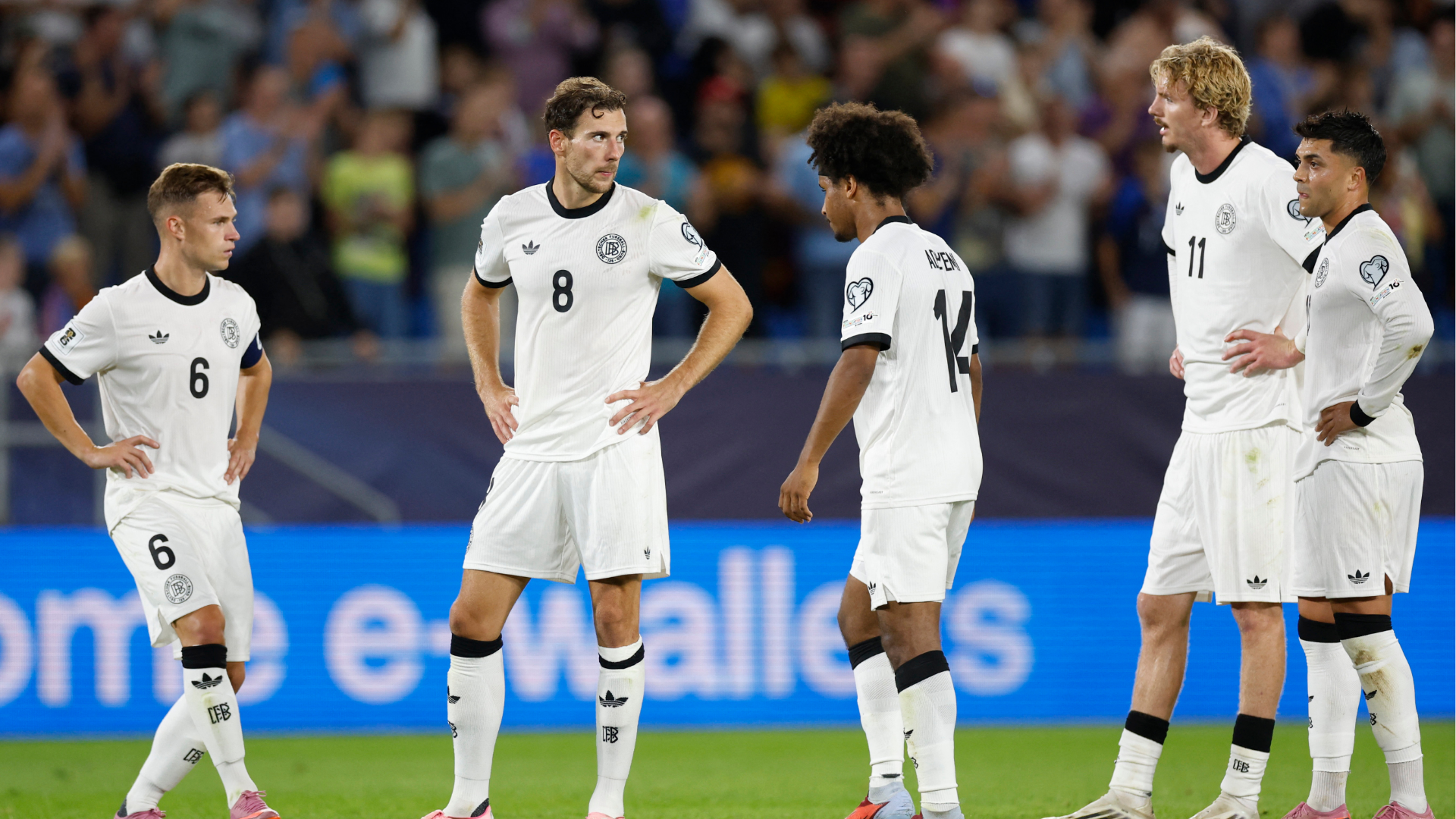
For the first time in its history as a unified nation, the Mannschaft had been knocked out in the group stage of a World Cup.
The collapse had several explanations. The team had shown signs of decline for months before the tournament, but Joachim Löw never managed to reverse the trend. He also remained loyal to much of the squad that had won the World Cup in 2014, and the generational transition arrived too late. Many of the players who had dominated world football four years earlier were no longer at their peak.

Most concerning for Germany was that history repeated itself.
At Qatar 2022, they were once again eliminated in the group stage, an unthinkable outcome for a four-time world champion and one of football’s greatest powers.
Yet German football has repeatedly demonstrated its ability to rebuild. After two disappointing World Cup cycles, a new generation has emerged with the goal of restoring the Mannschaft to its traditional place among the sport’s elite.
Because if there is one thing Germany has taught the football world over the years, it is that it can fall.
But it rarely stays down.
And at this FIFA World Cup, the objective is clear: leave behind the ghosts of Russia and Qatar, capture a fifth star, and return to the summit of world football.
Follow all the coverage of the FIFA World Cup 2026 on beIN SPORTS.