
- Home >
- Soccer >
- Women's Africa Cup of Nations >
- What is behind Algeria’s success after securing their first-ever FIFA Women’s World Cup qualification?
What is behind Algeria’s success after securing their first-ever FIFA Women’s World Cup qualification?
Les Vertes are undoubtedly experiencing the greatest moment in their history, earning a place at the 2027 FIFA Women’s World Cup in Brazil.
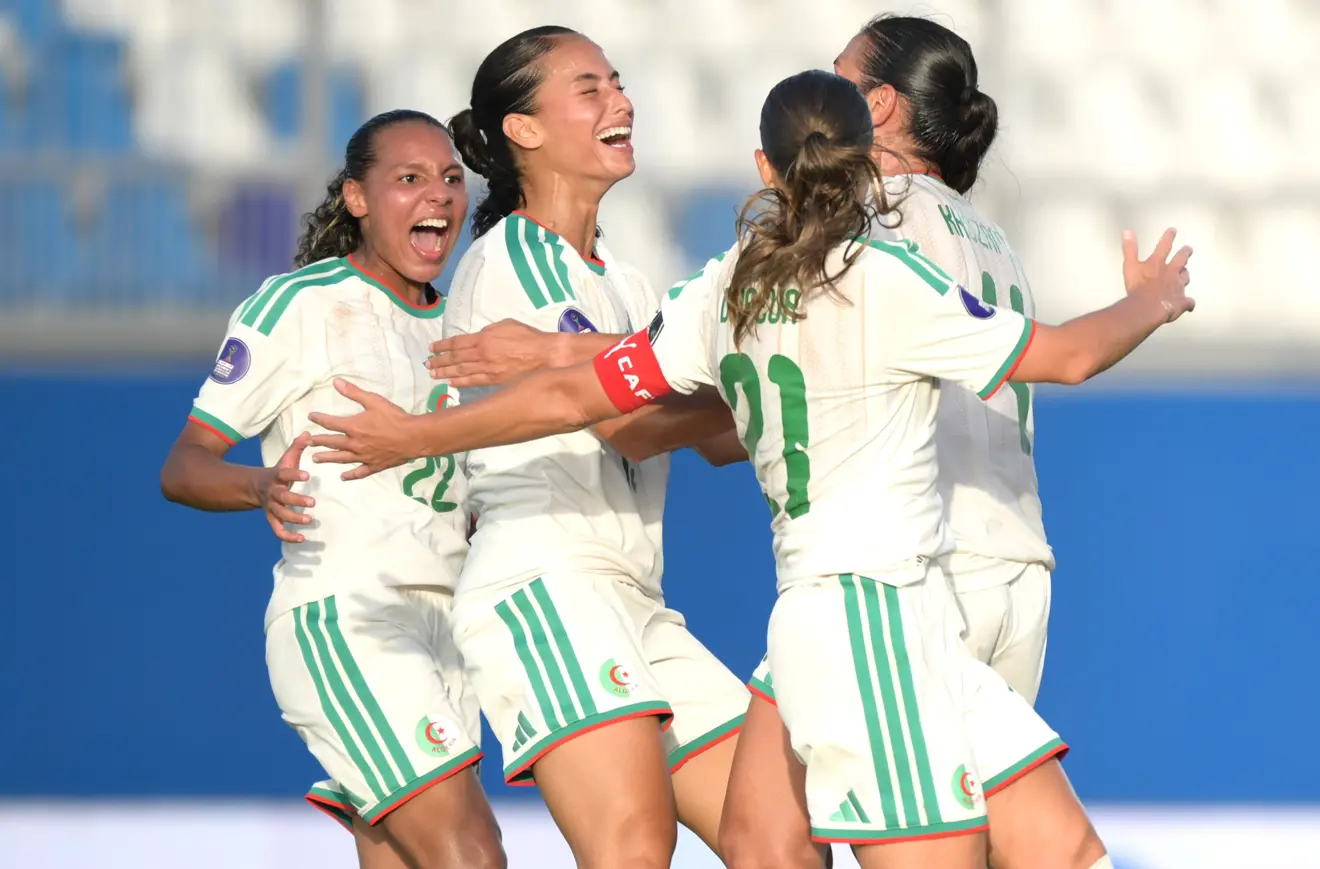
The team secured their first-ever qualification for a FIFA Women’s World Cup this Saturday after defeating Ivory Coast 2-1 in the WAFCON 2026 quarter-finals. They are the ninth African nation to qualify for the biggest tournament in women’s football.
The victory also saw Algeria reach the Africa Cup of Nations semi-finals for the first time. The team has competed in the tournament seven times and had previously progressed beyond the group stage on only two occasions.
📺📲 Watch all the WAFCON action on beIN SPORTS and beIN SPORTS Connect
#beINSPORTS #beINWAFCON2026 #WAFCON #TotalEnergiesWAFCON2026
International talent and a historic generation
One of the keys to Algeria’s breakthrough has been the experience of their players in foreign leagues.
The 26-player squad for WAFCON features representatives from clubs in France, England, Spain, Switzerland, Turkey and Saudi Arabia.
Among them are Inès Belloumou of West Ham United; Marine Dafeur of Bristol City; Aïcha Hamideche of Beşiktaş; Lina Boussaha of Al-Ittihad; and Melissa Bethi, who recently joined the Washington Spirit of the NWSL in the United States.
Algeria may not yet have a squad packed with superstars from Europe’s biggest leagues, but they do have an increasingly international core, shaped by competitive environments that have helped the team develop defensive organisation and confidence during a demanding continental tournament.
The team’s progress is clear. At WAFCON 2024, Algeria reached the quarter-finals for the first time. On the road to Morocco 2026, they defeated South Sudan before producing a major upset by eliminating Cameroon 3-1 on aggregate.
In this edition, Algeria also competed in Group A alongside Morocco, Senegal and Kenya before making history with their quarter-final victory.
World Cup qualification and a place in the semi-finals therefore represent two unprecedented milestones for Algerian women’s football.
Benstiti and a long-term institutional project
Another key figure is Frenchman Farid Benstiti, a coach whose résumé is difficult to match in African women’s football.
The manager was a four-time French champion with Olympique Lyonnais, won titles in Russia and China, and guided both Lyon and Paris Saint-Germain to Women’s Champions League finals.
He also coached OL Reign in the United States.
His appointment in 2022 was part of a strategic decision by the Algerian Football Federation (FAF). Under the presidency of Djahid Zefizef, Benstiti was appointed head coach and also placed in charge of the women’s football development department. His Algerian heritage also gives the project an additional sense of connection and belonging.
The structure included figures such as national technical director Mustapha Biskri, then-president of the National Women’s Football League Djamel Kashi, and Nassiba Laghouati, who was responsible for the women’s football committee.
Later, Rafika Guellati became president of the National Women’s Football League in 2025, while the federation continued working with clubs and organising training camps for players competing in the domestic league.
European-developed talent, international experience, an elite coach and a football federation committed to investing in the women’s game.
That combination explains Algeria’s remarkable rise: from reaching the quarter-finals for the first time in 2024 to securing, just two years later, a historic WAFCON semi-final appearance and their first-ever Women’s World Cup qualification.