
- Home >
- Soccer >
- PKO BP Ekstraklasa >
- Tomáš Pekhart: “Legia Is the Club of My Heart. There Is No Mercy When You Play There”
Tomáš Pekhart: “Legia Is the Club of My Heart. There Is No Mercy When You Play There”
Pekhart speaks about about the growing strength of Polish football, the pressure of playing for Legia, the demands placed on the club’s No. 9 and the challenges of competing in Europe
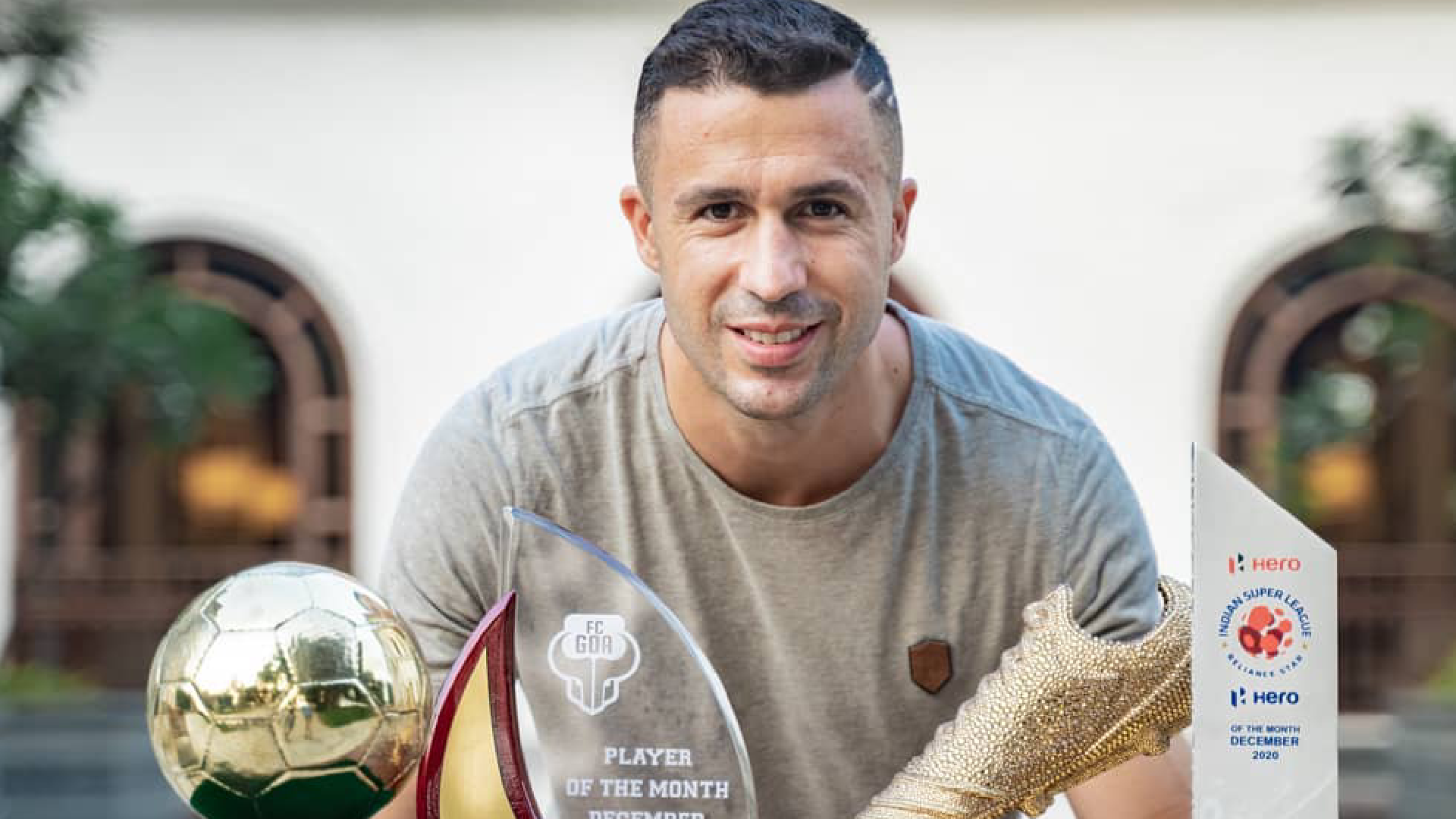
Former Legia Warsaw striker and Ekstraklasa top scorer Tomáš Pekhart speaks to Daniel Sobis about the growing strength of Polish football, the pressure of playing for Legia, the demands placed on the club’s No. 9 and the challenges of competing in Europe while fighting for domestic titles. The Czech forward also shares his thoughts on Mileta Rajović, Marek Papszun and Aleksandar Vuković, and reflects on the many coaches he worked with during his years in Warsaw.
Daniel Sobis: You spent several years in Polish football and know the Ekstraklasa better than most foreign players. How do you see the league today? Do you think it has become stronger over the years?
Tomáš Pekhart: Definitely. During my first few seasons, we were much stronger than most of the other teams, but that changed over the years.
Clubs now have bigger budgets and are able to sign very good players, especially foreign players who can come in and make a real difference. The league itself has made huge steps forward.
The television coverage is also excellent. When you play in Poland, you sometimes get the feeling that you are playing in one of Europe’s top five leagues because so many clubs have amazing supporters, big stadiums and very good facilities. It is a great place to play football.
Every year, the league is getting stronger and stronger. You can see how competitive it has become. Teams that were considered favorites can suddenly find themselves near the bottom of the table, while clubs nobody expected to challenge for the title can be fighting at the top.
It is a very competitive and physical league. Clubs have more money now and can bring in foreign players who add quality to their squads.

Daniel Sobis: Legia Warsaw have struggled to consistently challenge for the league title in recent seasons. From your experience, why is it so difficult to build that consistency? And what do you expect from Legia this season?
Tomáš Pekhart: I have always remained very close to Legia because this is truly the club of my heart. I had hoped that perhaps I could stay there in another role after everything I experienced and achieved with the club. In any case, I still follow Legia very closely.
One of the biggest challenges is that the Ekstraklasa has become so competitive. If you are also playing in Europe, you need a big and strong squad.
That is crucial. When you are playing every three days, you might be able to manage it for a couple of months, but if you keep progressing in European competitions, the players become more and more tired as the season goes on.
You have to be ready to compete every three days, and that is not easy because there are basically no easy games in the Ekstraklasa.
Then, on top of that, you have the challenge of European competition. We have often seen that when Polish clubs go far in Europe, it becomes much more difficult for them to maintain a high position in the league.
To compete successfully in the Ekstraklasa, in Europe and in the Polish Cup, you need a deep squad — and building that kind of squad requires significant investment.
Daniel Sobis: You were the Ekstraklasa’s top scorer with 22 goals in the 2020–21 season. In recent years, however, Legia have struggled to find a consistently successful No. 9. Why do you think that is?
Tomáš Pekhart: It is difficult. Maybe that is one of the reasons I survived at Legia until I was 36! I was always there to score goals.
There is no mercy at a club like Legia. If you are a striker, you have to deliver. If you do not score for two or three games, you can suddenly find yourself out of the team.
It is not easy because there is huge pressure from the supporters, from the city and from the club itself. It is a very demanding place to play.
Legia is the biggest club in Poland, and I was very fortunate to spend so many years there. The club kept extending my contract, and when I look back at it now, staying there until I was 36 was something incredible.
I am now involved a little bit in the agency side of football, and I can see how clubs look at players. Once you turn 29 or 30, some clubs already start seeing you as an older player.
That makes me even more grateful that I was able to stay at Legia for so many years.
One of my last big European nights with the club was at Stamford Bridge, where I captained the team, scored a goal and we won the game. It was really a dream come true and a fantastic memory from my final season.

Daniel Sobis: I have to ask you about Mileta Rajović. He arrived at Legia with big expectations, but his first season was not easy — although it was a difficult season for the entire team. As a striker yourself, what does a No. 9 need to succeed at Legia? Do you see Rajović becoming a player who can score 15 or 20 goals in an Ekstraklasa season?
Tomáš Pekhart: I know people criticized him a lot because he was not scoring enough, but you also have to look at how the style of football has changed.
When I played there, I had incredible wingers around me. I knew that in almost every game I would receive very good crosses and probably get three or four opportunities to score.
Then it was up to me. I knew the chances would come, and my job was to finish them.
More recently, I have watched games where the striker sometimes hardly gets any real chances because the team does not create enough opportunities.
As I said before, the league has also become much more competitive. Teams are stronger, more physical and have more money.
I think I was the last Ekstraklasa top scorer to score more than 20 goals in a season. In recent years, the top scorers have often finished with around 14, 15 or 16 goals.
That shows you that scoring 20 goals in this league is not easy for a No. 9.
I am very curious to see what happens with Legia this season. I know there are financial challenges, but they have a very good coach. It will be interesting to see how the season develops.
Daniel Sobis: If you could give Rajović just one piece of advice, what would it be?
Tomáš Pekhart: Score in the first game! Then everything becomes easier.
Daniel Sobis: You mentioned Marek Papszun. Do you believe he can make Legia successful again?
Tomáš Pekhart: For sure. He has the ability to do it.
But Legia is a completely different environment compared to Raków. There is much more pressure surrounding the club.
Ultimately, the results will show us what happens this season because there are many very good teams ready to compete for the title.
I am very curious to see how it develops.

Daniel Sobis: Another interesting story is Aleksandar Vuković at Widzew Łódź. You know him extremely well, both as a former teammate and as a coach. There are big expectations around Widzew and there have been significant changes at the club. How do you see Vuković leading this project?
Tomáš Pekhart: I am very close to the people at Widzew and to the club’s owner, Robert Dobrzycki.
When they were considering bringing Vuković to the club, they also asked me about him because he is like a second father to me.
We won titles together, and he was the person who brought me to Legia. We have a very close relationship.
I am also very close to Widzew and the people around the club. It is a very exciting project, and I think they can be very strong this season.
Daniel Sobis: If you had to pick one team to become Polish champion this season, who would you choose?
Tomáš Pekhart: I don’t know! It is very difficult to predict.
Anything can happen in the Ekstraklasa. We see that almost every season.
Daniel Sobis: You played under many different coaches at Legia — including Aleksandar Vuković, Czesław Michniewicz, Kosta Runjaić and Gonçalo Feio. They all had different personalities and different football philosophies. Do you think Legia’s frequent changes in coaching profiles have sometimes been part of the problem?
Tomáš Pekhart: It is difficult to say.
When Vuković was winning titles, he received a new contract and was voted the best coach of the season. Then, two months later, he was no longer the coach.
Sometimes there were decisions that I did not fully understand.
But this is football. At a club like Legia, if you do not get results for a few games, it becomes very difficult to keep your position.
The owner and the directors have to make decisions. Sometimes those decisions work out well, and sometimes they do not.
I worked with many different coaches during my time there. Of course, they all had different styles of play, different philosophies and different approaches.
But sometimes I think football can be simpler than we make it. You need quality players who can deliver results.
And as a coach, sometimes you also have to be a little bit of a psychologist. Managing people and personalities is a huge part of the job.
It is a complicated subject, but I worked with many coaches at Legia and, for me, Vuković was definitely one of the best.

Daniel Sobis: Gonçalo Feio was probably one of the most intense personalities you worked with. Could you see him returning to Polish football in the future?
Tomáš Pekhart: I have a good relationship with him.
I was even trying to help him when he was looking for another opportunity, including exploring possibilities in the Czech Republic.
For me, he is a very good coach. I thought he deserved the opportunity to stay at Legia after the season we had.
But the president and the directors decided to make a change.
That is football. You never know what will happen next.