
The National Teams With The Most FIFA World Cup Final Appearances
Germany dominates World Cup final history, but Brazil and Argentina continue chasing the Germans ahead of 2026.
Reaching a World Cup final means entering football history
The FIFA World Cup is football’s biggest stage, and only a handful of national teams have consistently managed to reach the most important match on the planet: the final.
Across more than 90 years of World Cup history, only a select group of countries turned final appearances into part of their football identity.
Croatia, Spain, Sweden, and England – 1 final
Croatia reached its only World Cup final at Russia 2018, where it lost to France, although that golden generation led by Luka Modrić remains immortal in Croatian football history.
Meanwhile, Sweden played in the 1958 final, the same tournament where a young Pelé exploded onto the world stage. England, on the other hand, reached and won the only final in its history in 1966, defeating Germany at Wembley to lift its first and only World Cup title, and finally Spain played and won his only final in 2010 World Cup against Netherlands.

Uruguay, Hungary, and Czech Republic – 2 finals
Historic Uruguay owns a perfect World Cup final record. La Celeste won both finals it played: 1930 against Argentina and the legendary 1950 Maracanazo victory over Brazil.
Meanwhile, both Hungary and the former Czechoslovakia reached two finals without lifting the trophy. Hungary lost the finals of 1938 and 1954, while Czechoslovakia fell in 1934 and 1962.
Netherlands – 3 finals
Very few national teams carry a history as brilliant and painful at the same time as the Netherlands. The Dutch reached three World Cup finals… and lost all three.
The Oranje fell in 1974 against Germany, in 1978 against Argentina, and in 2010 against Spain, despite producing legendary generations led by stars such as Johan Cruyff, Marco van Basten, Wesley Sneijder, and Arjen Robben.

France – 4 finals
The French national team has become one of modern football’s greatest powers. France has now reached four World Cup finals and won two of them.
Les Bleus lifted the trophy in 1998 and 2018, while finishing runners-up in 2006 against Italy and in 2022 after losing one of the greatest finals in football history against Argentina.
Italy and Argentina – 6 finals
Two historical giants of world football share third place in this ranking. Both Italy and Argentina reached six World Cup finals throughout history.
The Azzurri won the titles in 1934, 1938, 1982, and 2006, while losing the finals of 1970 and 1994.
Meanwhile, Argentina lifted the World Cup in 1978, 1986, and 2022, but lost the finals of 1930, 1990, and 2014. La Albiceleste also became one of the most consistent national teams of recent decades thanks to generations led by Diego Maradona and Lionel Messi.

Brazil – 7 finals
Whenever World Cups are discussed, Brazil inevitably enters the conversation. The Seleção has reached seven finals and remains the most successful national team of all time with five world titles.
Brazil won the World Cup in 1958, 1962, 1970, 1994, and 2002, while losing the finals of 1998 against France and the dramatic 1950 showdown against Uruguay, although officially that edition did not feature a final due to the tournament format.
Germany – 8 finals
No national team has played more World Cup finals than Germany. The Germans reached football’s biggest match eight times and built a legendary reputation based on consistency and relentless competitiveness.
Germany won the titles in 1954, 1974, 1990, and 2014, while finishing runners-up in 1966, 1982, 1986, and 2002. From the era of Franz Beckenbauer to the generation of Miroslav Klose, Germany established itself as the most consistent nation in World Cup history.

The 2026 World Cup could change history
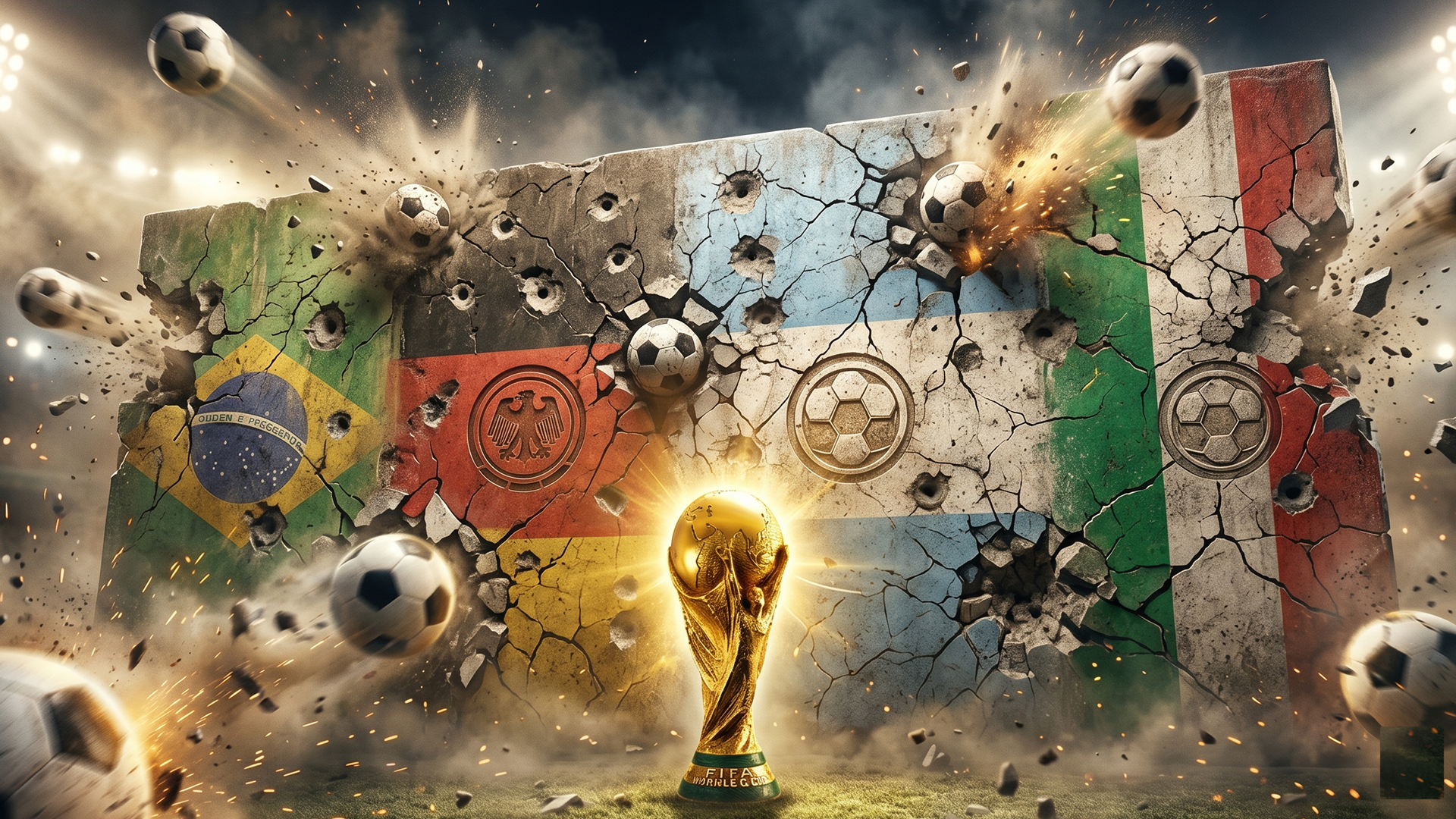
The 2026 FIFA World Cup could create new movement within these historic rankings.
Brazil will try to close the gap on Germany, Argentina dreams of reaching another final after winning Qatar 2022, and France hopes to continue building a modern dynasty led by Kylian Mbappé.