
- Home >
- Soccer >
- FIFA World Cup 2026™ >
- From Qatar to the Future: Morocco’s Ambitious Road to the 2026 World Cup
From Qatar to the Future: Morocco’s Ambitious Road to the 2026 World Cup
From a historic run in Qatar to a long-term vision taking shape. Morocco no longer wants to surprise, it wants to compete with the best.
The tournament that changed everything
The Morocco national team was one of the defining stories of the 2022 FIFA World Cup, well beyond the Final itself. They topped a demanding group ahead of Croatia, Belgium, and Canada, eliminated Spain on penalties in the Round of 16, and knocked out Portugal in the quarterfinals.
Their run ended against France in the semifinals, but history had already been made. Morocco became the first African nation to reach a World Cup semifinal, delivering a performance built on discipline, belief, and a clear identity under head coach Walid Regragui.
Momentum heading into 2026
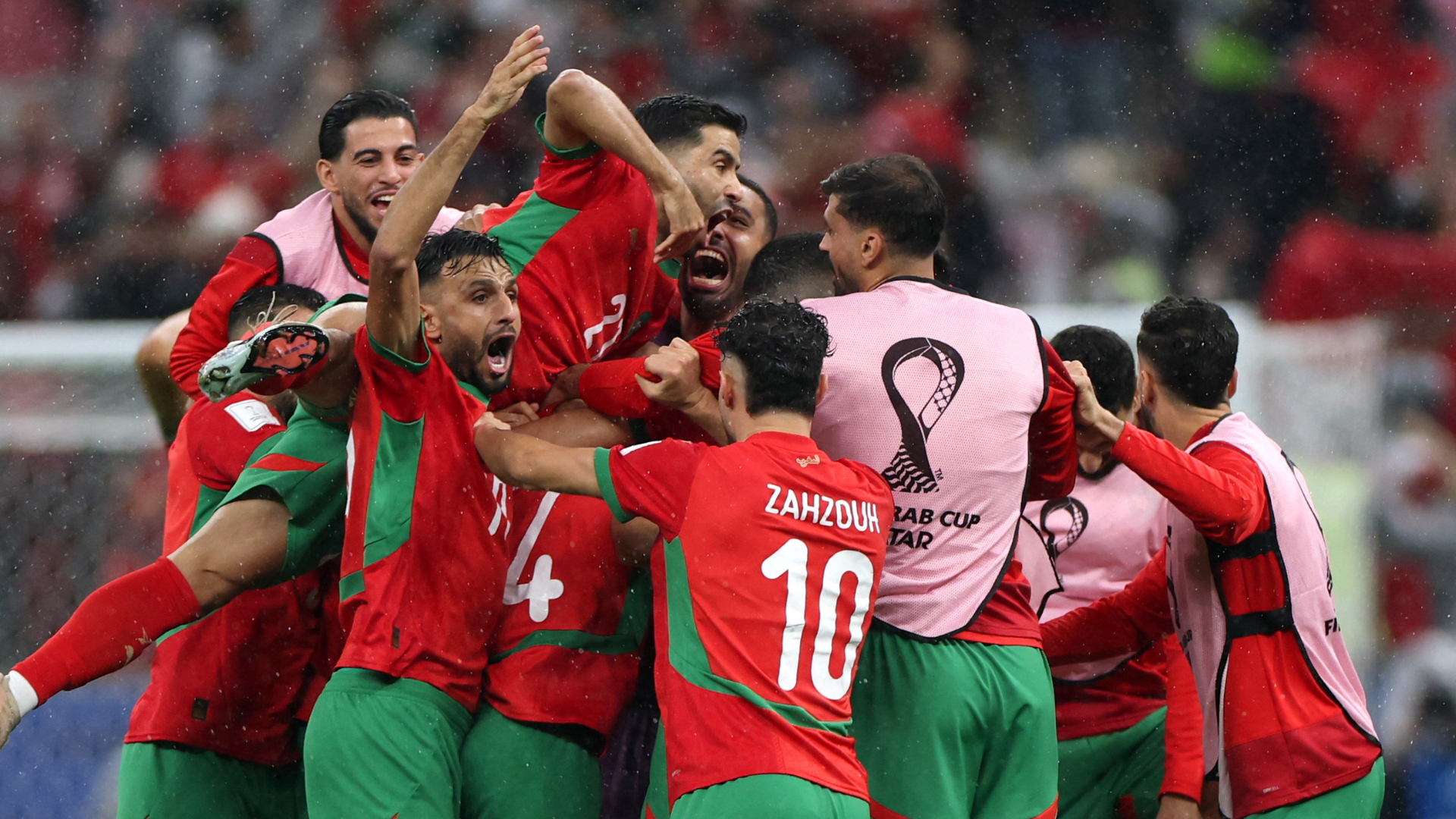
Rather than treating Qatar as a one-off achievement, Morocco chose continuity. With Regragui still in charge, the Atlas Lions cruised through qualification for the 2026 World Cup, winning all eight of their matches with two games still to play.
On the continental stage, Morocco also took another step forward. Playing at home, they reached the Africa Cup of Nations Final, falling to Senegal in extra time. A painful defeat, but further confirmation of their place among Africa’s elite.
An inconsistent past, a stronger present
Historically, Morocco’s World Cup journey has been marked by highs and long periods of frustration. Before 2022, their best finish came in Mexico 1986, where they reached the Round of 16. In USA 1994, France 1998, and Russia 2018, they exited at the group stage.
That inconsistency has often defined African teams at the World Cup. In the 21st century, only Senegal and Ghana have reached the knockout rounds on multiple occasions. Morocco broke that pattern in Qatar and are now aiming to make it the new standard.
Regional dominance and continental growth
Beyond the senior national team, Morocco’s progress is visible across the board. Regionally, they have won the last three African Nations Championships (2018, 2021, and 2025), asserting their dominance in the competition reserved for locally based players.
They also lifted the FIFA Arab Cup in 2012 and 2025, while their recent AFCON run marked a clear shift after years of early exits. The trajectory is no longer sporadic, it is sustained.
Success built from the ground up
Morocco’s project extends well beyond the senior side. The U-20 national team captured the World Cup title last year after defeating Argentina in the Final and later finished runners-up at the 2025 AFCON.
The U-17 squad continued that upward trend by winning the continental title after finishing second in 2023, while the U-23 team claimed the 2023 AFCON, though a World Cup appearance remains the next target.
In the women’s game, Morocco qualified for their first-ever World Cup in 2023 and reached the Women’s AFCON Final in both 2022 and 2024, falling just short of the trophy but signaling historic progress.
What could the 2026 path look like?
At the 2026 World Cup, Morocco are projected to share a group with Brazil, Haiti, and Scotland, with a realistic chance of advancing as either group winners or runners-up.
In a potential knockout scenario, the road could feature the Netherlands or a European playoff winner in the Round of 32, followed by Mexico or Norway in the Round of 16, France or England in the quarterfinals, and Spain or Argentina in the semifinals. A Final against one of those heavyweights would represent the ultimate test.
Morocco are no longer chasing fairy tales. With continuity, structure, and a strong pipeline from youth to senior level, the challenge heading into 2026 is clear: prove that Qatar was the beginning of something lasting, not an isolated moment in history.