

- Home >
- Soccer >
- FIFA World Cup >
- How does the ball sensor that denied Croatia an equalizer against Portugal work?
How does the ball sensor that denied Croatia an equalizer against Portugal work?
Croatia equalized in the dying moments, but the technology behind the Trionda intervened to disallow the goal, as a special sensor detected an offside position by the Balkan side.
The football world has been left baffled by the events in the final minutes of the match between Portugal and Croatia, where the referee disallowed a goal for *Vatreni* that appeared perfectly legitimate. However, after a VAR review, the official ruled it out because the ball's sensor detected a touch that resulted in an offside position. But how does this sensor—which dashed the Balkan nation's hopes—actually work? Here is the explanation.
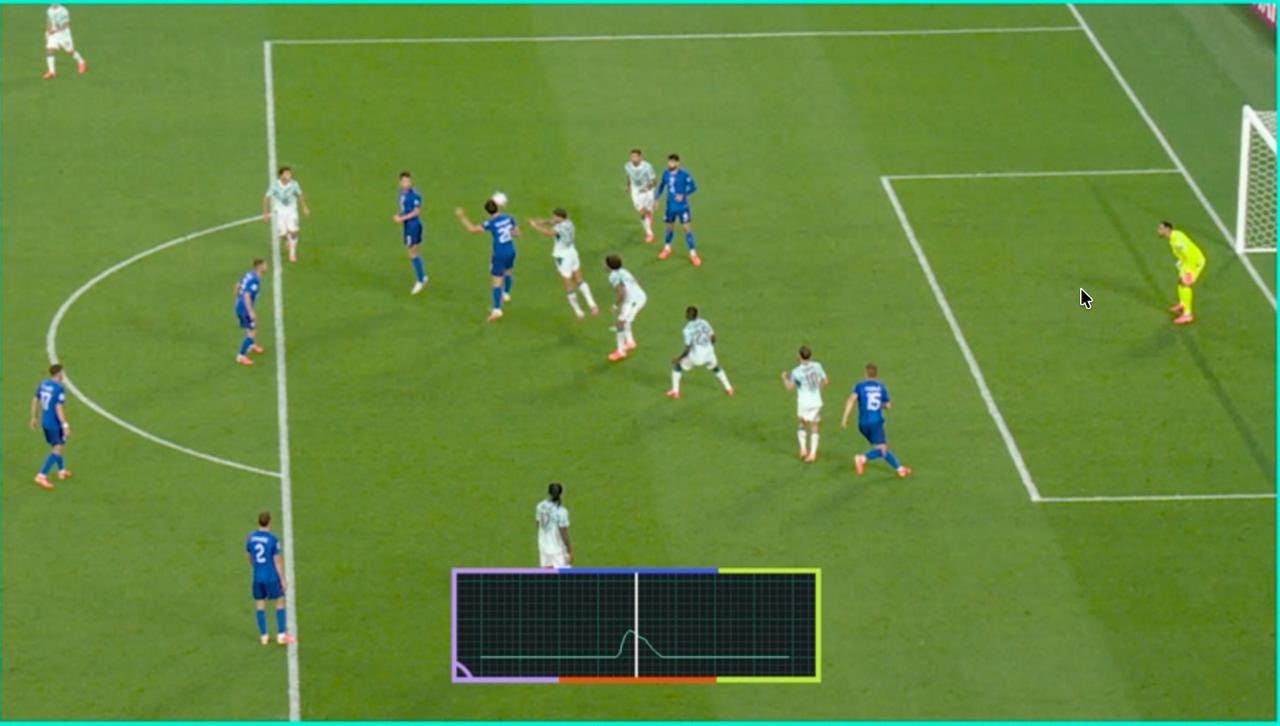
How does the Trionda Technology Works?
The 2026 FIFA World Cup is not only showcasing the world's best national teams, but also some of the most advanced technological innovations ever applied to the sport.
During a visit to an exhibition in New York, we got a closer look at several tools helping transform the game both on and off the pitch. One of the most eye-catching developments is the connected ball, equipped with an internal sensor capable of tracking every touch, pass, shot, and movement in real time. The technology gathers instant data without affecting the ball's weight, balance, or flight path, a challenge that required years of engineering and testing.

Beyond data analysis, another major focus of the tournament is helping players cope with the high temperatures expected in several host cities. To address this challenge, Adidas introduced a cooling system specifically designed for athletes. The solution includes a cooling vest that helps lower body temperature, an insulating jacket that preserves the cooling effect, and a footwear accessory designed to keep players' feet cooler during recovery periods.
These innovations aim to optimize player performance in extreme conditions while providing new tools for performance analysis and game development.
By combining science, engineering, and elite-level performance, World Cup 2026 is demonstrating how the future of football has already arrived.
Follow all the action from the FIFA World Cup 2026 on beIN SPORTS.