
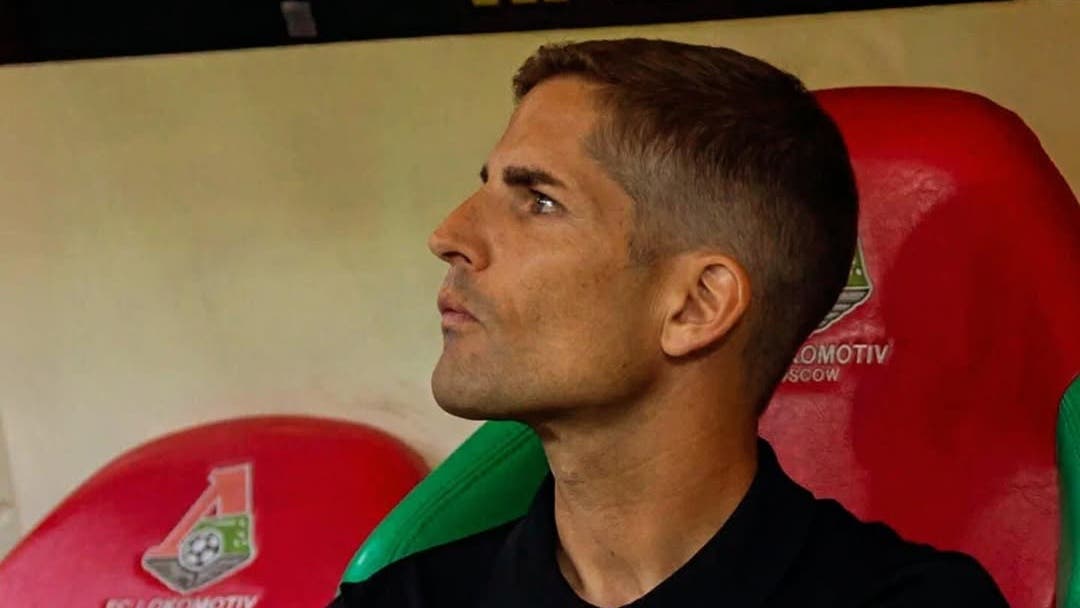
Robert Moreno and the use of ChatGPT that defined his time at Sochi
Months after his departure, Sochi revealed that Robert Moreno relied heavily on artificial intelligence as a core element of the club’s sporting planning.
A dismissal with an unexpected backstory
Robert Moreno was dismissed as head coach of Sochi, a club in the Russian Premier League, in September of last year. At the time, the decision was attributed to the team’s poor results, but months later, previously undisclosed details about his working methods have emerged.
Club officials confirmed that the Spanish coach made extensive use of ChatGPT, an artificial intelligence tool, as a central part of both sporting and logistical planning — an approach that raised internal concerns and ultimately contributed to his exit.

Artificial intelligence as a core working tool
The revelation came from Andrei Orlov, Sochi’s former general director, who publicly explained how Moreno regularly turned to ChatGPT to design training sessions, prepare matches and even organize team travel.
According to Orlov, the use of the tool was not occasional. It became a constant reference point, to the extent that it evolved into one of the main pillars of Moreno’s day-to-day work during his spell in Russia.
Planning decisions that pushed the limits
One of the most striking episodes occurred during preparations for a trip to Khabarovsk, one of the longest journeys in the Russian league.
“Robert said everything was already planned with ChatGPT,” Orlov recalled. Upon reviewing the presentation generated by the tool, club executives realized the proposed itinerary would have left players without sleep for 28 consecutive hours. After adjusting the parameters in the application, the plan was modified — but the team ultimately followed the schedule designed by the AI.
The incident raised serious concerns about the level of dependence Moreno had developed on the technology.
ChatGPT’s influence on transfers
Artificial intelligence was not limited to logistics. During the summer transfer window, Sochi were looking to strengthen their attack and considered profiles such as Vladimir Pisarsky, Pavel Meleshin and Artur Shushenachev.
Moreno fed statistical data on the three forwards — sourced from Wyscout — into ChatGPT. According to Orlov, the system concluded that Shushenachev was the strongest option, a recommendation that directly influenced the club’s final decision.
A method that created internal friction
Club executives did not question the use of new technologies as a support tool, but they were concerned by the weight artificial intelligence carried in key decision-making processes.
“It’s a tool like any other — why not use it?” Orlov explained. “But for Moreno, GPT became one of the main ones,” drawing a clear line between technological assistance and excessive delegation.
A controversial ending
Robert Moreno’s tenure at Sochi came to an end amid poor results and unconventional methods. While his dismissal was driven by multiple factors, the intensive use of ChatGPT came to symbolize an approach that failed to convince the club.
Months later, the case has reignited debate over the role of artificial intelligence in professional football — and how far it can, or should, influence the decisions of a coaching staff.