




FIFA Club World Cup
The World Cup's greatest mystery: what really happened to the original trophy?
One of football's most iconic prizes disappeared foreve… Show More
One of football's most iconic prizes disappeared foreve
The rules surrounding the World Cup today have been shaped by lessons learned throughout the tournament’s history. One of the most remarkable stories involves the trophy itself, the decision to redesign it, and how the original version was lost forever.

Many consider the World Cup trophy to be literally priceless. Its value goes far beyond the materials used to make it. What truly matters is the symbolism that comes with lifting football’s biggest prize, even if only once every four years.
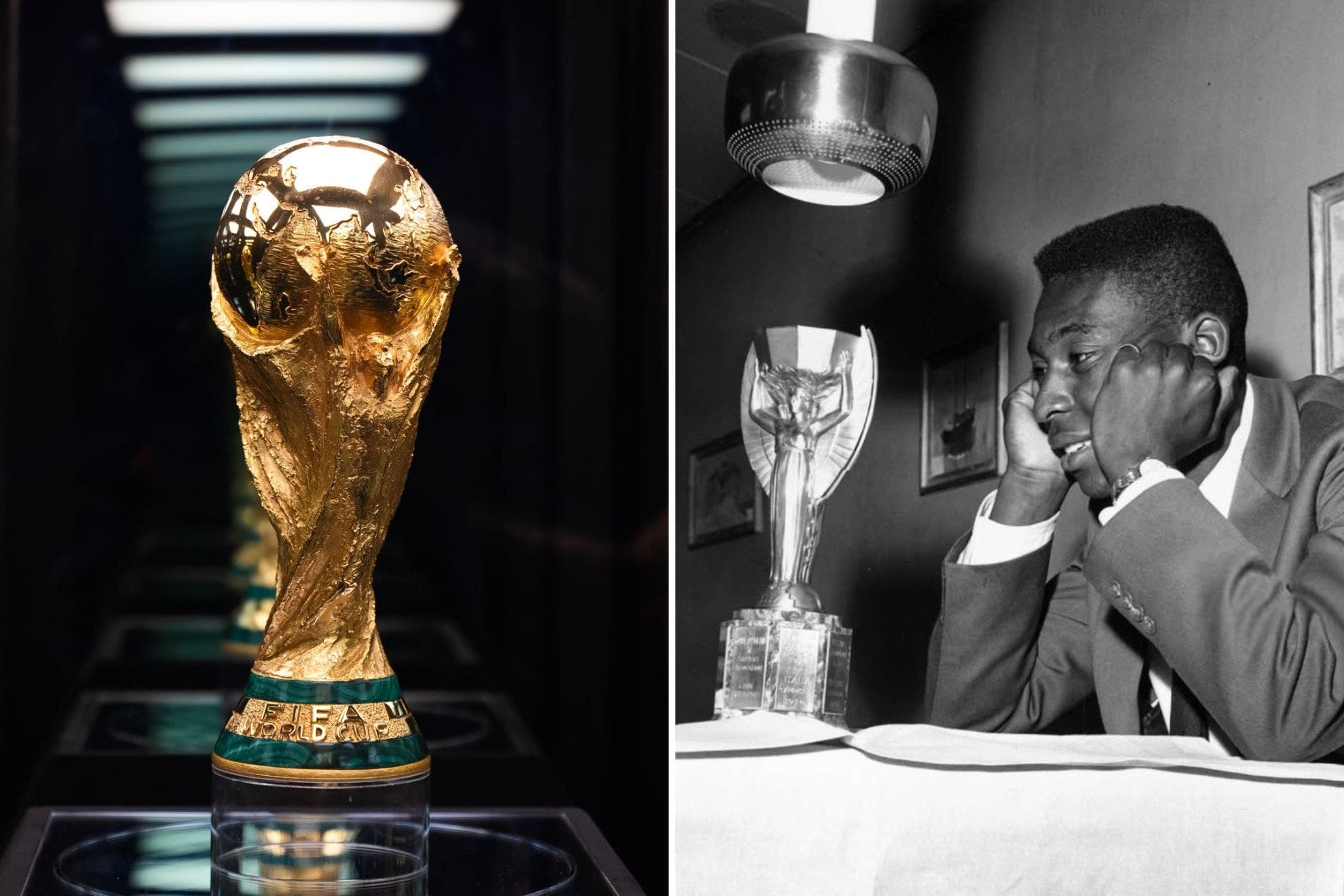
From the first World Cup in 1930 through 1970, champions received the Jules Rimet Trophy. Created for the inaugural tournament hosted and won by Uruguay, the trophy was designed by French sculptor Abel Lafleur and featured Nike, the ancient Greek goddess of victory, holding a golden chalice. After a series of dramatic events, however, FIFA eventually replaced it with the trophy used today.
A trophy that survived war and theft
Long before it disappeared for good, the Jules Rimet Trophy had already survived several close calls. During World War II, FIFA Vice-President Ottorino Barassi secretly removed it from a bank vault in Rome. Fearing Nazi forces could seize it as war loot, he hid the trophy inside a shoebox under his bed until the conflict ended.
The trophy made headlines again in 1966, just months before the World Cup in England. It was stolen from a public exhibition in London, triggering an international search. A week later, a collie dog named Pickles famously discovered it wrapped in newspaper beneath a hedge, allowing the trophy to be recovered in time for the tournament.
In that era, FIFA had established that any nation winning three World Cup titles would earn permanent ownership of the original trophy. Brazil achieved that milestone in 1970 by defeating Italy in the final, securing its third world championship and taking possession of the Jules Rimet Trophy as promised.
The disappearance that changed football history
The story took a tragic turn in December 1983. Thieves broke into the headquarters of the Brazilian Football Confederation in Rio de Janeiro and stole the trophy. Unlike the London theft years earlier, this time it never returned.
After authorities arrested individuals connected to the crime, reports indicated the trophy had been melted down and the gold sold. Because of that, the original Jules Rimet Trophy was never recovered. Whether that account was entirely accurate remains one of football’s enduring mysteries, but the trophy itself has never resurfaced.
Its disappearance marked the end of an era. The Jules Rimet Trophy became the last of its kind, while FIFA had already introduced a new design in 1974 that remains the World Cup trophy today.
Modern security measures reflect the lessons learned from the trophy’s turbulent past. Today, the original World Cup trophy is heavily protected and can only be handled directly by world champions and FIFA President Gianni Infantino without gloves.
Since the redesign, FIFA has maintained strict control of the trophy. Players receive it during the official award ceremony and celebrations, but it must later be returned to football’s governing body. The version awarded permanently to champions is a replica made from a bronze and zinc mixture coated with three layers of 18-karat gold.
Still, the material is not what gives the trophy its value. Whether made of gold or paper, the World Cup remains football’s ultimate prize. For the players who lift it, the reward is something far greater: a place in the sport’s history and a connection to a legacy that even the disappearance of the original trophy could not erase.


