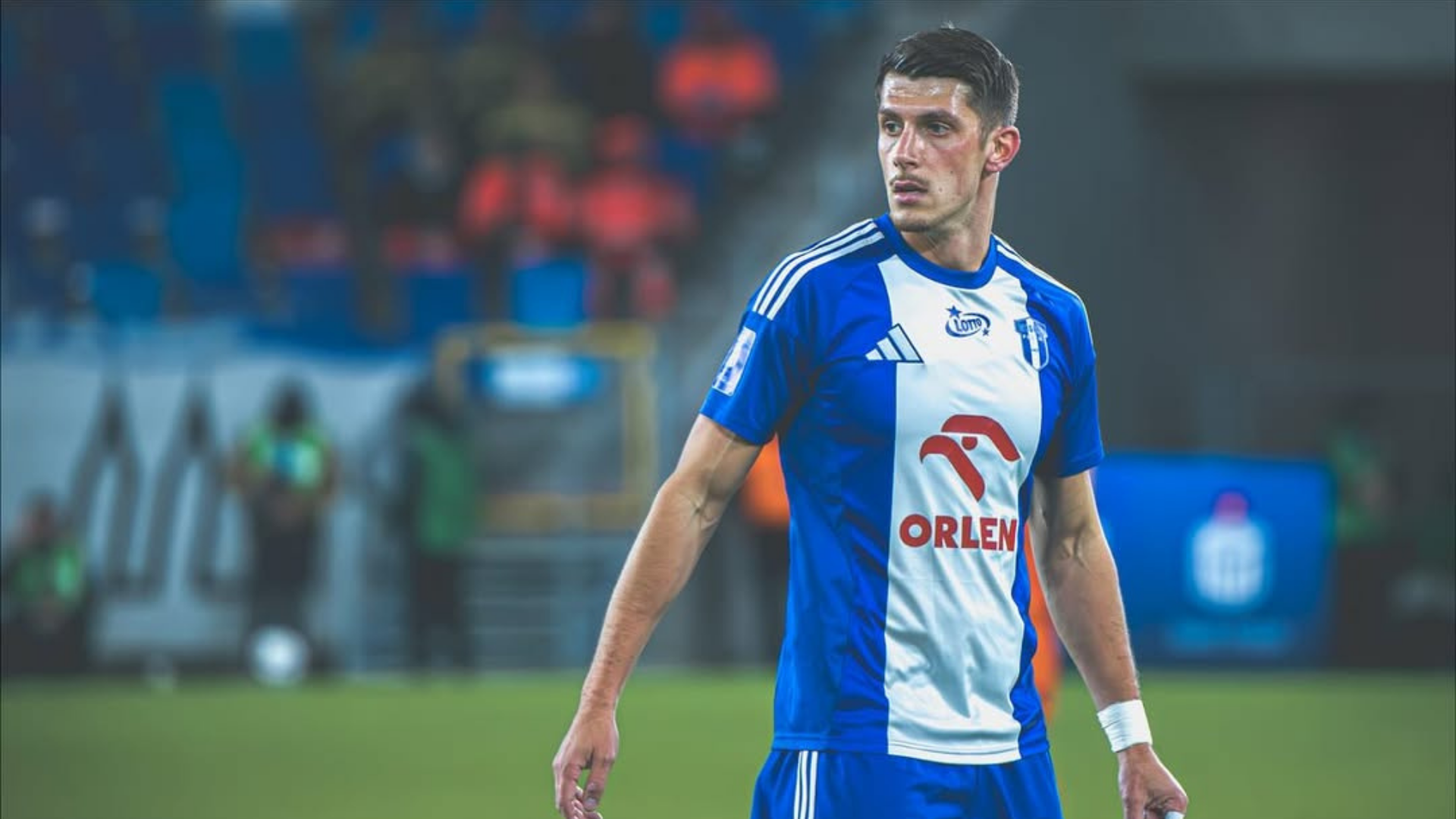

Rafał Grodzicki: "We Built This Promotion as a Team"
Fresh off a successful return to Poland’s top flight, Śląsk Wrocław is once again preparing for life in the Ekstraklasa after securing promotion at the first attempt. One of the most historic clubs in Polish football, Śląsk has won two Polish championship titles, lifting the national crown in 1977 and again in 2012, while also capturing the Polish Cup twice and regularly competing on the European stage.
In this exclusive interview for beIN SPORTS USA, Daniel Sobis sits down with Śląsk Wrocław Sporting Director Rafał Grodzicki to discuss the club’s immediate return to the Ekstraklasa, the impact of head coach Ante Šimundža, transfer plans for the upcoming season, and the long-term vision behind the club’s rebuild.
Grodzicki knows Śląsk Wrocław better than most. Before becoming the club’s Sporting Director, he represented Śląsk as a player, making more than 100 appearances for the Wrocław side and serving as one of the team’s leaders on the pitch. Today, he is helping shape the club’s future from the boardroom, overseeing a project designed not only to secure survival in the Ekstraklasa, but to establish strong foundations for sustained success in the years ahead.
Speaking exclusively to beIN SPORTS USA, Grodzicki reflects on the challenges of the promotion campaign, the evolution of the squad, and the ambitions of a club determined to reclaim its place among Poland’s elite.
Promotion Secured After a Challenging Season
Daniel Sobis:
Rafał, Śląsk Wrocław is back in the Ekstraklasa after just one season away. What emotions are you experiencing now that promotion has been secured?
Rafał Grodzicki:
It’s difficult to fully describe those emotions. There was incredible euphoria after the victory over Polonia Bytom, when we secured promotion, and then again after our final home match of the season. I don’t think it had completely sunk in at that point what this team had actually achieved.
In the second half of the season, we lost only one match. We collected points consistently and changed the way we played, especially away from home, where we became much more effective.

I think the moment it truly becomes real will be when we walk out for our first Ekstraklasa match and see the league branding around us. That’s when we’ll fully realise that we managed to return to the top flight after just one year.
Daniel Sobis:
The beginning of the season was challenging. Did you ever have doubts about achieving promotion?
Rafał Grodzicki:
We knew from the start that the beginning would be difficult. The club underwent a real revolution rather than an evolution. There were many changes and a lot of new players.
One key factor was that Ante Šimundža inherited a team that already had a football identity and understood certain principles. He didn’t have to build everything from scratch. At the same time, he had to learn the league and adapt to its demands.
The first half of the season was inconsistent. We started slowly, then enjoyed a very strong period, but the end of the autumn round was disappointing. Fortunately, the gap to the leading teams wasn’t too large.
During the winter, we made several adjustments. We changed our tactical system, strengthened the squad, and worked hard on improving different aspects of our game.
There were moments when we felt that even reaching the promotion play-offs would be a success and that we would have to fight for promotion through that route. However, week after week, we kept improving. There were challenges around the club, but the team grew stronger through adversity. That resilience ultimately helped us achieve our goal.
The Impact of Ante Šimundža
Daniel Sobis:
Ante Šimundža will remain at Śląsk Wrocław. From a sporting perspective, what was the biggest change he brought to the team?
Rafał Grodzicki:
I think the biggest change was mental. Ante remained largely the same coach in terms of his principles and football philosophy, but he evolved as a leader and communicator.
Most importantly, he united the dressing room. The players fully bought into his vision and developed a strong connection with him. The scenes after the promotion-clinching match, when the players lifted him into the air, perfectly illustrated that relationship.
The team was ready to fight for him, and he was equally committed to fighting for the team.
That unity became our greatest strength. We had several matches where we fell behind but still found a way to come back and win. In the end, promotion was achieved not by individuals but by the collective strength of the group.
Daniel Sobis:
You mentioned tactical changes. How important was the change in playing style?
Rafał Grodzicki:
It was extremely important. At the start of the season, we wanted to dominate possession and control matches through the ball. However, we often struggled after losing possession.
One turning point was the defeat against Miedź Legnica. We conceded goals after losing the ball in dangerous situations, and that match showed us that our defensive organisation needed to improve significantly.
From that point onwards, we focused much more on our structure without the ball. Especially away from home, we became very effective in a compact defensive block and in transition.
With players like Przemysław Banaszak and Luka Marjanac, we had the pace and quality to hurt opponents on the counterattack. That became one of our most effective weapons during the promotion campaign.
Key Players Behind Promotion
Daniel Sobis:
Przemysław Banaszak scored 16 goals this season and played a key role in securing promotion. Do you believe he can be just as effective in the Ekstraklasa?
Rafał Grodzicki:
I certainly hope so. Przemek has made tremendous progress. He is a striker who thrives when there is space to attack. He can accelerate quickly, run in behind defenders and create danger with his movement.
At the same time, we know that our squad also needs a more traditional number nine – a striker who can play with his back to goal, hold up the ball and compete physically with defenders. That profile is something we are actively looking for.
We believe that adding such a player could also help players like Banaszak and Marjanac continue their development.
Daniel Sobis:
Michał Rosiak enjoyed an excellent second half of the season. What was behind his improvement?
Rafał Grodzicki:
First and foremost, Michał’s profile suits attacking football. He likes to move inside, create advantages in offensive situations and influence the game in advanced areas.
That’s one of the reasons why we switched to a 3-5-2 system. Players such as Rosiak and Kurowski are naturally more comfortable as wing-backs than traditional full-backs because they enjoy attacking responsibilities.
Michał joined us without a full pre-season, so we knew that the winter preparation period would be crucial. Building his physical condition allowed him to perform at a much higher level in the spring.
His football education also played a role. Having developed within Arsenal’s academy system, he possesses a strong understanding of the game and excellent technical qualities. However, I still believe there is even more potential to unlock.